SEO Title: HVAC Replacement Cost in 2026: Complete Cost Guide
Suggested URL Slug: /hvac-replacement-cost/
Primary Keyword: HVAC replacement cost
Secondary Keywords: new HVAC system cost, HVAC installation cost, central AC replacement cost, furnace and AC replacement cost, HVAC cost per square foot, ductwork replacement cost
Meta Description: Find out how much HVAC replacement costs in 2026. Compare central AC, furnace, heat pump, ductwork, labor, permits, thermostats, and complete HVAC system installation costs.
Replacing an HVAC system is one of the largest mechanical-system expenses a homeowner may face.
Your home’s heating, ventilation, and air-conditioning equipment works behind the scenes every day to maintain comfortable indoor temperatures. When the system gets older, breaks down repeatedly, struggles to heat or cool the house, or becomes increasingly expensive to operate, replacement may eventually make more financial sense than continuing to repair it.
But homeowners quickly discover that there is no single answer to the question:
How much does HVAC replacement cost?
A small home replacing a basic central air-conditioning system may spend considerably less than a large house installing a high-efficiency heat pump, new furnace, smart thermostat, filtration equipment, zoning controls, and completely new ductwork.
For 2026, the average HVAC replacement cost is approximately $7,500, while many projects fall around $5,000 to $12,500. More extensive installations involving new ductwork, upgraded filtration, or other major improvements can reach approximately $22,000.
This HomeCostPilot guide explains where that money goes, which upgrades are worth considering, what can unexpectedly increase the final bill, and how to create a realistic HVAC replacement budget.
HVAC Replacement Cost at a Glance
| Project | Typical Planning Cost |
|---|---|
| Basic HVAC replacement | $5,000–$8,000 |
| Average HVAC replacement | Around $7,500 |
| Higher-capacity/upgraded system | $8,000–$12,500 |
| Central air system | Around $3,900–$7,900 |
| HVAC installation labor | Around $1,500 |
| HVAC permit | Around $250–$400 |
| New ductwork addition | Around $3,500+ |
| Insulation upgrade | Around $1,500 |
| New thermostat | Around $120–$260 |
| Major HVAC project with upgrades | Up to $22,000+ |
These figures are national planning estimates rather than contractor quotes. Current 2026 pricing varies according to system size, equipment type, efficiency, climate, labor rates, home design, existing ductwork, and installation complexity.
What Is Included in an HVAC Replacement?
Many homeowners hear “HVAC replacement” and assume it means purchasing one appliance.
In reality, an HVAC system can contain several separate components.
Depending on your home, a replacement may involve:
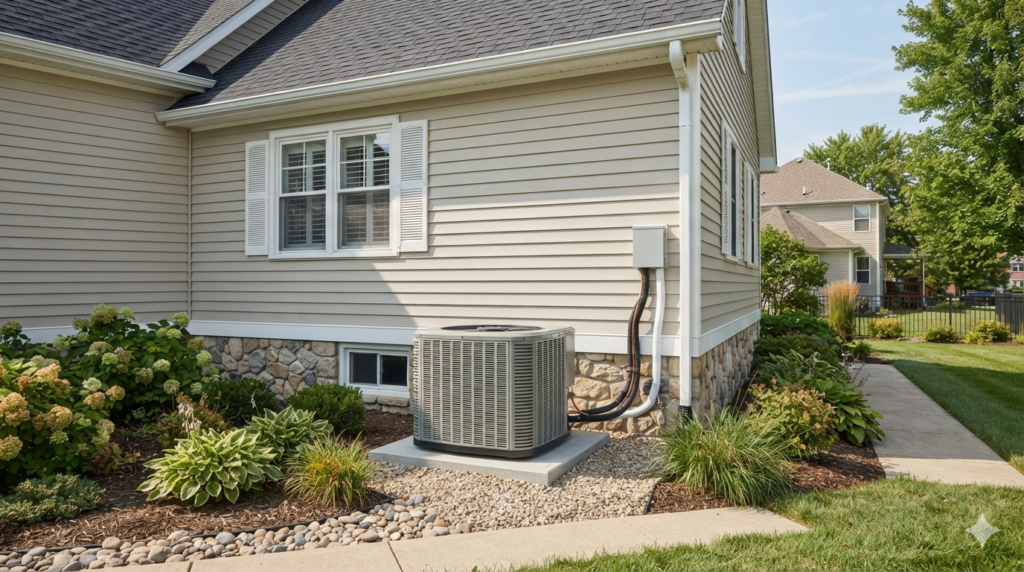
- Outdoor condenser
- Indoor evaporator coil
- Furnace
- Air handler
- Heat pump
- Refrigerant lines
- Drain lines
- Electrical disconnect
- Thermostat
- Ductwork
- Supply registers
- Return-air system
- Air filtration equipment
- Humidifier or dehumidifier
- Condensate pump
- Equipment pad
- Venting
- Zoning controls
A quote that includes only an outdoor AC condenser will therefore look dramatically cheaper than a quote for a complete heating and cooling system.
When comparing estimates, make sure each contractor is quoting approximately the same scope of work.
Average HVAC Replacement Cost in 2026
Current national cost data places HVAC replacement at approximately $7,500 on average.
Standard replacements can begin around $5,000, while many upgraded installations reach approximately $12,500.
When new ductwork, advanced filtration, insulation, or additional HVAC improvements are required, the complete project can potentially reach $22,000.
The most important point is that the equipment price is only part of your total.
Installation quality, system sizing, duct condition, electrical work, permits, disposal, refrigerant handling, and controls all contribute to the final bill.
HVAC Replacement Cost by Home Size
Larger homes generally require greater heating and cooling capacity.
A 1,000-square-foot home usually does not need the same system as a 3,500-square-foot home.
However, home size alone is not enough to determine required capacity.
Professionals should also consider:
- Climate
- Ceiling height
- Window area
- Window efficiency
- Insulation
- Air leakage
- Number of occupants
- Building orientation
- Number of floors
- Roof exposure
- Shade
- Duct losses
This is why simply saying “I have a 2,000-square-foot house, give me a 4-ton system” is not the ideal approach.
A professional load calculation provides a more accurate method of determining system size.
Why HVAC System Size Matters
Buying a larger HVAC system does not automatically mean better comfort.
An oversized system can:
- Cycle on and off too frequently
- Reduce humidity control
- Increase equipment wear
- Create temperature swings
- Waste energy
- Produce excess noise
An undersized system may:
- Run almost continuously
- Struggle during extreme weather
- Increase energy use
- Fail to maintain the desired temperature
- Wear out more quickly
Proper sizing is therefore one of the most important parts of an HVAC replacement.
Central Air Conditioner Replacement Cost
For homeowners replacing central AC, current 2026 estimates place AC replacement around $3,900 to $8,000, depending on the equipment and installation.
Another current HVAC pricing breakdown places a central air system itself at approximately $3,900 to $7,900, before some optional improvements.
The final price depends on:
- Cooling capacity
- Efficiency rating
- Brand
- Compressor technology
- Indoor coil
- Refrigerant lines
- Electrical requirements
- Existing ductwork
- Labor
- Warranty
A straightforward replacement using existing compatible infrastructure is usually cheaper than converting an older home to central air for the first time.
Furnace Replacement and Combined HVAC Systems
In many homes, the furnace and air conditioner share components.
The furnace or air handler may contain the blower that distributes both heated and cooled air through the house.
If both systems are old, homeowners may consider replacing them together.
Potential advantages include:
- Matching equipment
- One installation project
- Improved efficiency
- Compatible controls
- Reduced risk of replacing the second major component shortly afterward
However, replacing functioning equipment solely because another component failed is not always necessary.
The decision should consider equipment age, condition, efficiency, repair history, compatibility, and budget.
Heat Pump Replacement Cost
Heat pumps have become increasingly popular because one system can provide both heating and cooling.
There are multiple heat-pump configurations, including:
- Air-source heat pumps
- Ducted heat pumps
- Ductless mini-splits
- Cold-climate heat pumps
- Geothermal systems
Pricing varies dramatically among these technologies.
An air-source heat pump may fit within a conventional HVAC replacement budget, while geothermal installation can be substantially more expensive because of ground-loop construction.
Before choosing a heat pump, homeowners should evaluate local climate, electricity rates, available incentives, existing ductwork, and backup heating requirements.
HVAC Efficiency Ratings
Higher-efficiency systems typically cost more upfront.
For cooling equipment, homeowners may encounter efficiency measurements such as SEER2.
For furnaces, efficiency is commonly expressed using AFUE.
The important principle is straightforward:
Higher efficiency can reduce the amount of energy required to provide the same heating or cooling output.
However, the most expensive efficiency level does not automatically provide the best financial return in every home.
The potential savings depend on:
- Climate
- Energy prices
- Hours of operation
- Home insulation
- Equipment lifespan
- Difference in purchase price
A moderate efficiency upgrade can sometimes provide a better balance between upfront investment and operating savings.
Single-Stage vs Two-Stage vs Variable-Speed HVAC
Equipment technology also affects price.
Single-Stage
A single-stage system typically operates at full capacity whenever it is running.
Advantages:
- Lower upfront cost
- Simpler equipment
- Straightforward repair
Disadvantages:
- Less precise temperature control
- More noticeable cycling
- Potentially less humidity control
Two-Stage
A two-stage system can operate at a lower output during mild conditions and increase output when necessary.
Possible benefits:
- Longer cycles
- Improved comfort
- Better humidity control
- Quieter operation
Variable-Speed / Variable-Capacity
Premium systems can adjust output across a much wider range.
Advantages can include:
- Stable indoor temperatures
- Quiet operation
- Better humidity management
- Potential efficiency improvements
But equipment and repair costs can also be higher.
HVAC Ductwork Replacement Cost
Ductwork is one of the biggest potential additions to an HVAC replacement bill.
If existing ducts are properly sized, sealed, insulated, and in good condition, they may continue to be used.
However, damaged or poorly designed ducts can reduce the performance of even an expensive new HVAC system.
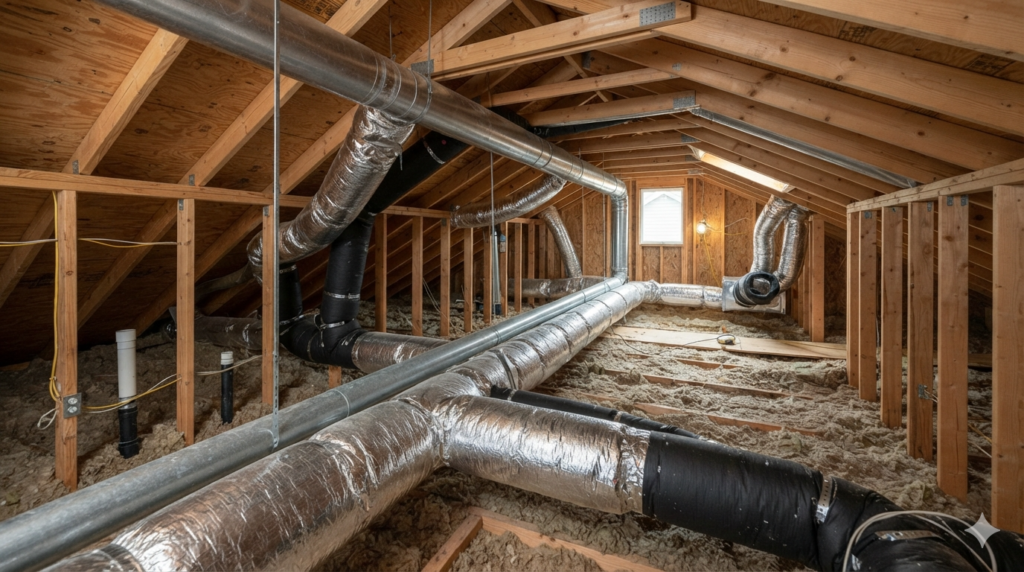
Potential problems include:
- Air leaks
- Crushed flexible ducts
- Disconnected ducts
- Poor insulation
- Incorrect sizing
- Inadequate return air
- Excessively long runs
- Mold or moisture damage
- Poor register placement
Current 2026 HVAC data shows that ductwork can add several thousand dollars to a system replacement. One current HVAC estimate uses approximately $3,500 as an optional ductwork installation figure, while AC-related projects requiring significant ductwork changes can add even more depending on the home.
A separate 2026 duct-replacement estimate places many dedicated duct-replacement projects between approximately $452 and $2,182, averaging around $1,251, although full-system redesigns or extensive new installations can cost substantially more.
Should You Replace Ductwork With a New HVAC System?
Not automatically.
Ask the HVAC contractor to inspect the existing ducts.
If they are:
- Correctly sized
- Properly sealed
- Mechanically sound
- Adequately insulated
- Free from major contamination
- Properly routed
replacement may not be necessary.
If the ducts are severely leaking or poorly designed, however, spending thousands on premium equipment while ignoring the duct system can limit the benefits of the upgrade.
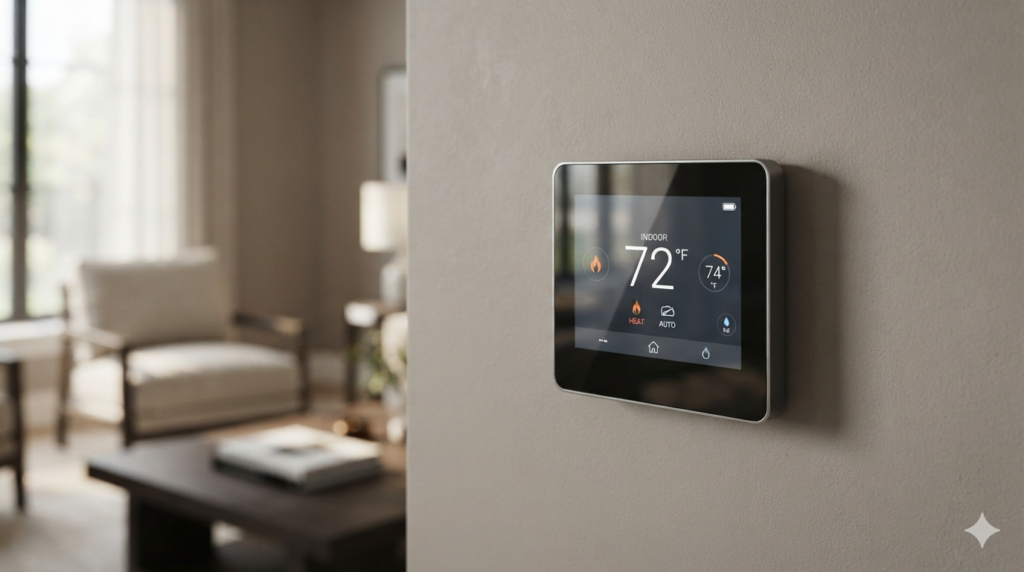
Thermostat Replacement Cost
A thermostat is one of the least expensive HVAC components but has a significant impact on daily usability.
Current HVAC cost data places many thermostat replacements around $120 to $260 as part of an installation.
Options include:
- Basic digital thermostat
- Programmable thermostat
- Wi-Fi thermostat
- Smart thermostat
- Learning thermostat
- Multi-zone controller
Smart thermostats can provide:
- Scheduling
- Remote control
- Energy monitoring
- Vacation modes
- Usage reports
- Geofencing
- Smart-home integration
Before purchasing one, confirm compatibility with your HVAC system.
HVAC Zoning Systems
Zoning divides the house into multiple independently controlled areas.
For example:
- Upstairs
- Downstairs
- Bedrooms
- Main living area
- Home office
A zoning system can use:
- Multiple thermostats
- Motorized dampers
- Zone control board
Zoning may improve comfort in houses where one thermostat struggles to represent the entire building.
However, it adds equipment and installation complexity.
The ductwork must also be properly designed to handle changing airflow when zones open and close.
Air Filtration Upgrades
A standard HVAC system typically includes a filter.
More advanced systems may include:
- Thick media filters
- HEPA filtration
- Electronic air cleaners
- UV systems
- Whole-home purification
These improvements add cost and may affect airflow.
A very restrictive filter paired with an improperly designed duct system can reduce performance.
Ask the contractor whether the blower and ductwork are appropriate for the proposed filtration system.
Humidifiers and Dehumidifiers
Indoor humidity affects comfort as well as temperature.
Whole-home humidifiers may be useful in dry climates or during cold winters.
Dehumidification can be valuable in hot, humid climates.
Some premium HVAC systems provide better humidity control automatically, while other homes benefit from dedicated equipment.
These upgrades should solve a real indoor-comfort problem rather than simply being added because they appear on a contractor’s options list.
Insulation and HVAC Replacement
Installing a powerful new system in a poorly insulated or extremely leaky home may not solve the underlying problem.
Heat can still enter or leave through:
- Attic
- Walls
- Windows
- Doors
- Air gaps
- Unsealed penetrations
Current HVAC replacement data notes that insulation condition, windows, climate, and home age all influence the amount of heating and cooling capacity a property needs.
Before selecting oversized equipment, determine whether inexpensive building-envelope improvements could reduce the home’s heating and cooling requirements.
HVAC Permit Cost
Mechanical work often requires permits depending on the jurisdiction.
Current 2026 HVAC cost data places many HVAC permit expenses at around $250 to $400.
Permit requirements can involve:
- Mechanical work
- Electrical work
- Gas connections
- Equipment replacement
- Structural changes
Ask whether permits are included in the contractor’s quote.
HVAC Labor Cost
Installation quality matters enormously.
Even excellent equipment can perform poorly when:
- Refrigerant charge is incorrect
- Airflow is wrong
- Ductwork leaks
- Equipment is oversized
- Drainage is incorrect
- Electrical connections are poor
- Thermostat wiring is wrong
Current national HVAC replacement examples often assign around $1,500 to installation labor, although actual labor expenses vary considerably according to project difficulty and local market conditions.
Hidden Costs During HVAC Replacement
Homeowners should prepare for items that may not be obvious before installation.
Electrical Upgrades
A newer system may require:
- New breaker
- New disconnect
- Wiring changes
- Service upgrades
Refrigerant Line Replacement
Existing refrigerant lines may not always be suitable for the new system.
Drainage Improvements
Condensation must drain safely.
Equipment Pad
Outdoor equipment may need a new level base.
Duct Modifications
New equipment dimensions or airflow requirements may require transitions.
Gas Venting
Furnace replacements can require venting modifications.
Asbestos
Older homes may contain materials requiring specialized handling.
Current 2026 HVAC guidance specifically recommends budgeting for items such as permits, ductwork, thermostats, insulation, zoning, and potentially hazardous-material removal because these additions can materially change the final project cost.
Repair or Replace Your HVAC System?
Replacement is not always necessary.
A relatively new HVAC system with one failed component may make more sense to repair.
Replacement becomes more attractive when:
- Equipment is near the end of its expected life
- Major repairs occur repeatedly
- Energy consumption is increasing
- Important replacement parts are difficult to obtain
- Comfort is poor
- The existing system uses outdated technology
- Multiple major components are failing
For AC specifically, current estimates place repairs roughly between $130 and $2,000, while full replacement is often around $3,900 to $8,000.
Compare repair expense with system age and the likelihood of additional failures.
Signs Your HVAC System May Need Replacement
Watch for:
- Frequent breakdowns
- Rising electric or gas bills
- Uneven temperatures
- Excessive equipment noise
- Weak airflow
- Excess humidity
- System runs continuously
- Short cycling
- Unusual odors
- Difficulty reaching thermostat setting
- Repeated refrigerant problems
- Older equipment requiring major repairs
One problem does not automatically mean replacement is necessary.
A professional diagnosis should come first.
Example $8,000 HVAC Replacement Budget
| Category | Example Budget |
|---|---|
| HVAC equipment | $5,200 |
| Installation labor | $1,500 |
| Thermostat | $200 |
| Permit | $300 |
| Electrical/material modifications | $300 |
| Removal and disposal | $200 |
| Contingency | $300 |
| Total | $8,000 |
This is an illustrative planning example rather than a quote.
Example $15,000 Complete HVAC Upgrade
| Category | Example Budget |
|---|---|
| Higher-efficiency HVAC equipment | $7,500 |
| Installation | $2,000 |
| Duct modifications | $2,500 |
| Smart thermostat | $250 |
| Air filtration | $700 |
| Electrical work | $500 |
| Permit | $350 |
| Insulation/sealing improvements | $700 |
| Contingency | $500 |
| Total | $15,000 |
A home’s actual requirements may differ substantially.
How to Save Money on HVAC Replacement
Get Several Detailed Quotes
Compare:
- Equipment model
- Efficiency
- Capacity
- Warranty
- Labor
- Thermostat
- Ductwork
- Permits
Do not compare only the final number.
Replace Before Complete Failure
Emergency replacement during extreme weather can limit your ability to compare contractors.
Avoid Unnecessary Oversizing
Larger equipment generally costs more and may actually reduce comfort when incorrectly sized.
Check Available Incentives
Depending on location and equipment, efficient systems may qualify for rebates, tax incentives, or utility programs.
Improve Basic Air Sealing
Reducing uncontrolled air leakage can improve HVAC performance.
Maintain the New System
Regular filter replacement and professional servicing can help protect your investment.
Where Not to Cut Costs
Proper Sizing
Do not select equipment based solely on the lowest quote.
Installation Quality
Poor installation can erase the benefits of premium equipment.
Duct Sealing
Do not allow conditioned air to escape into attics or crawlspaces.
Electrical Safety
Electrical work should comply with applicable requirements.
Drainage
Incorrect condensate drainage can cause water damage.
Questions to Ask an HVAC Contractor
Before hiring an HVAC company, ask:
- What size system does my home require?
- How was that size calculated?
- What exact equipment model are you proposing?
- What is the efficiency rating?
- Is installation included?
- Is old-equipment removal included?
- Are permits included?
- Does my ductwork need repair?
- Are refrigerant lines being reused?
- Is a thermostat included?
- What electrical work is required?
- What manufacturer warranty applies?
- What labor warranty do you provide?
- Is maintenance required to keep the warranty valid?
- Are there available rebates?
- What is excluded from this quote?
- What could increase the price after installation begins?
Compare HVAC Quotes Correctly
Imagine these two quotes:
Contractor A: $7,000
Contractor B: $8,100
At first, Contractor A appears cheaper.
But suppose Contractor B includes:
- Better efficiency equipment
- New thermostat
- Permit
- Duct sealing
- New equipment pad
- Old equipment disposal
- Longer labor warranty
Contractor B could actually provide greater value.
Always compare the complete specification.
How Long Does HVAC Replacement Take?
A straightforward replacement can sometimes be completed relatively quickly.
More complicated projects take longer when they involve:
- Complete ductwork
- Zoning
- Electrical upgrades
- Multiple systems
- Building modifications
- Permitting
- Special-order equipment
Planning ahead also gives homeowners time to verify equipment availability rather than making an emergency decision during the hottest or coldest week of the year.
Is High-Efficiency HVAC Worth It?
Potentially.
Higher-efficiency equipment can reduce operating costs, but you should compare the additional purchase price with expected savings.
Consider:
- How long you plan to own the house
- Local climate
- Current energy prices
- Existing system efficiency
- Equipment usage
- Insulation quality
- Additional cost of the high-efficiency model
The best choice is often the system offering a good balance of efficiency, reliability, comfort, and upfront cost.
Frequently Asked Questions
How much does HVAC replacement cost in 2026?
Current national data puts the average at approximately $7,500, with many standard replacements around $5,000 to $12,500. Larger projects with ductwork and other upgrades can approach $22,000.
How much does central AC replacement cost?
Current 2026 estimates commonly place AC replacement around $3,900 to $8,000, depending on system type and installation complexity.
Should I replace my furnace and AC together?
It may make sense if both units are old or if matching equipment improves compatibility, but functioning equipment does not automatically need replacement.
Does new HVAC require new ductwork?
No. Existing ductwork may remain if it is appropriately sized and in good condition.
Is a bigger HVAC unit better?
No. Oversizing can cause short cycling, poor humidity control, temperature swings, and unnecessary energy consumption.
How much should I keep for unexpected expenses?
Maintaining roughly 10% to 15% of the expected project budget as a contingency can provide flexibility for unforeseen work.
Should I choose the cheapest HVAC quote?
Not automatically. Compare system sizing, exact equipment, warranties, permits, ductwork, labor, and included accessories.
Final Thoughts
HVAC replacement is more than purchasing an air conditioner or furnace.
A successful project requires the entire system to work together:
- Correctly sized equipment
- Proper airflow
- Efficient ductwork
- Safe electrical connections
- Correct refrigerant setup
- Reliable drainage
- Accurate controls
- Good installation
For 2026, approximately $7,500 is a useful national-average starting point, but the actual cost may range from around $5,000 for a straightforward replacement to $20,000 or more for a major whole-home upgrade.
Before signing a contract, obtain detailed estimates, confirm the exact equipment model, ask how the system was sized, inspect the existing ductwork, understand the warranty, and reserve some budget for unexpected work.
A correctly designed HVAC system does more than heat and cool a home.
It can improve comfort, humidity control, indoor air quality, reliability, and energy performance for years to come.