SEO Title: Flooring Installation Cost in 2026: Prices by Material
Suggested URL Slug: /flooring-installation-cost/
Primary Keyword: flooring installation cost
Secondary Keywords: new flooring cost, flooring cost per square foot, hardwood installation cost, vinyl flooring cost, laminate flooring cost, tile installation cost
Meta Description: Discover flooring installation costs in 2026. Compare hardwood, laminate, vinyl, tile, carpet, material, labor, removal, subfloor repair, and complete floor replacement prices.
Replacing flooring can transform the appearance of a home faster than almost any other major renovation.
Floors cover an enormous visible area. Their material, color, texture, condition, and installation quality influence how practically every room feels.
But flooring projects can also be difficult to budget because the advertised price of the flooring itself is only one part of the final expense.
Homeowners may also need to pay for:
- Installation labor
- Old flooring removal
- Disposal
- Underlayment
- Subfloor repairs
- Floor leveling
- Moisture barriers
- Baseboards
- Transitions
- Stair work
- Furniture moving
For 2026, professional flooring installation for a typical 500-square-foot project averages around $3,159, with many projects ranging approximately $1,528 to $4,859. Current data places a broad average around $12.50 per square foot, although actual flooring prices vary dramatically by material and project complexity.
This HomeCostPilot guide explains the complete cost of installing new flooring and shows how different materials can affect your final budget.
Flooring Installation Cost at a Glance
| Category | Typical Planning Figure |
|---|---|
| 500 sq. ft. flooring project | $1,528–$4,859 |
| National average for 500 sq. ft. | Around $3,159 |
| Broad average cost | Around $12.50 per sq. ft. |
| General material/installation range | Roughly $3–$22+ per sq. ft. |
| Subfloor replacement | $1,500–$5,000 |
| Underlayment for 500 sq. ft. | $250–$2,700 |
| Hardwood project average | $2,469–$7,033 |
| Laminate project average | $1,471–$4,657 |
| Tile flooring | Around $15–$20 per sq. ft. |
Current 2026 data shows substantial differences by flooring material, room size, subfloor condition, local labor rates, layout, and preparation requirements.
Why Flooring Prices Vary So Much
Consider two 500-square-foot flooring projects.
Home A:
- Flat concrete slab
- Old carpet removes easily
- Basic luxury vinyl plank
- Simple rectangular rooms
Home B:
- Damaged wood subfloor
- Old ceramic tile requires demolition
- Premium hardwood
- Multiple closets
- Hallways
- Stairs
- Complex transitions
Both homes contain 500 square feet of new flooring.
But their final costs can be dramatically different.
The flooring material is only one variable.
Flooring Cost Per Square Foot
A current broad planning range for flooring is approximately $3 to $22 per square foot, depending heavily on material and installation requirements.
Some specialized or premium installations can exceed this range.
For example, natural stone, exotic hardwood, custom patterns, extensive floor preparation, or complex stairs can increase costs significantly.
Example Flooring Cost by House Area
Using broad planning figures:
| Floor Area | $5/sq. ft. | $10/sq. ft. | $15/sq. ft. | $20/sq. ft. |
|---|---|---|---|---|
| 100 sq. ft. | $500 | $1,000 | $1,500 | $2,000 |
| 250 sq. ft. | $1,250 | $2,500 | $3,750 | $5,000 |
| 500 sq. ft. | $2,500 | $5,000 | $7,500 | $10,000 |
| 750 sq. ft. | $3,750 | $7,500 | $11,250 | $15,000 |
| 1,000 sq. ft. | $5,000 | $10,000 | $15,000 | $20,000 |
| 1,500 sq. ft. | $7,500 | $15,000 | $22,500 | $30,000 |
| 2,000 sq. ft. | $10,000 | $20,000 | $30,000 | $40,000 |
These are simple mathematical examples, not contractor estimates.
How Much Extra Flooring Should You Buy?
Contractors generally need more material than the exact measured floor area.
Extra material accounts for:
- Cuts
- Waste
- Damaged pieces
- Pattern alignment
- Odd room shapes
- Future repairs
Current flooring guidance suggests homeowners may need to allow around 10% extra material for waste in many standard installations.
More complicated patterns can require additional waste.
Examples include:
- Herringbone
- Chevron
- Diagonal tile
- Intricate borders
Hardwood Flooring Installation Cost
Hardwood remains one of the most desirable flooring options because of its natural appearance and potential longevity.
Current 2026 data places many hardwood installation projects between approximately $2,469 and $7,033.
The price depends on:
- Wood species
- Plank width
- Grade
- Thickness
- Finish
- Installation method
- Room layout
- Subfloor
- Pattern
Common hardwood choices include:
- Oak
- Maple
- Hickory
- Walnut
- Cherry
Premium or exotic species generally cost more.
Solid Hardwood vs Engineered Hardwood
Solid Hardwood
Made from a solid piece of wood.
Potential advantages:
- Traditional appearance
- Can often be refinished multiple times
- Long potential lifespan
Considerations:
- More sensitive to moisture
- Expansion and contraction
- Installation requirements
Engineered Hardwood
Made from multiple layers with a genuine hardwood surface.
Potential advantages:
- Greater dimensional stability
- Can work in more installation situations
- Genuine wood appearance
Quality varies significantly.
Premium engineered hardwood may cost as much as or more than some solid hardwood options.
Hardwood Pattern Cost
Simple straight-plank installation is generally more affordable than decorative layouts.
Herringbone can add substantial labor because every piece must be positioned precisely.
Current 2026 hardwood guidance notes that herringbone patterns can add roughly 30% to the flooring bill because of additional installation time and complexity.
Homeowners wanting a premium appearance on a limited budget could consider using decorative patterns only in a smaller area.
Laminate Flooring Installation Cost
Laminate provides a wood-like or stone-like appearance at a lower price than many natural materials.
Current 2026 data places laminate flooring installation around $1,471 to $4,657, with an average near $2,997, depending on the project.
Advantages include:
- Affordable price
- Large range of designs
- Easy cleaning
- Scratch resistance
- Floating installation options
However, quality varies.
Very inexpensive laminate can look artificial or perform poorly around moisture.
Premium products often provide more realistic textures and stronger wear layers.
Luxury Vinyl Plank Flooring
Luxury vinyl plank, commonly abbreviated LVP, has become extremely popular.
It can imitate:
- Oak
- Walnut
- Stone
- Tile
- Concrete
Potential advantages include:
- Water resistance
- Relatively affordable cost
- Easy maintenance
- Comfortable feel
- Large style selection
Because vinyl can be installed as a floating floor in many situations, installation may be simpler than nail-down hardwood or traditional tile.
However, the subfloor still needs to be sufficiently flat.
A floating floor will not hide major dips, humps, or structural problems.
Vinyl Sheet Flooring
Sheet vinyl is different from luxury vinyl plank.
Because it can cover relatively large areas with limited seams, it is often used in:
- Laundry rooms
- Utility rooms
- Kitchens
- Rental properties
- Budget renovations
The material can be inexpensive, but careful subfloor preparation is important because imperfections underneath may eventually become visible.
Tile Flooring Installation Cost
Tile can provide excellent durability and water resistance.
Current 2026 estimates place many tile flooring installations around $15 to $20 per square foot, with complete projects commonly ranging around $800 to $3,000 depending on size and material.
Tile options include:
- Ceramic
- Porcelain
- Marble
- Travertine
- Slate
- Granite
- Glass
- Mosaic
Natural stone generally costs more than basic ceramic.
Ceramic vs Porcelain Tile
Ceramic
Advantages:
- Wide variety
- Often affordable
- Easy to customize
Porcelain
Advantages:
- Dense
- Durable
- Low water absorption
- Excellent for high-traffic areas
Porcelain can sometimes cost more and may require more effort to cut.
Both can produce excellent results when correctly installed.
Natural Stone Flooring
Natural stone creates a distinctive appearance because no two pieces are exactly identical.
Options include:
- Marble
- Travertine
- Slate
- Limestone
- Granite
But homeowners should consider:
- Material cost
- Weight
- Sealing
- Maintenance
- Staining
- Installation skill
Natural stone may also require a particularly stable subfloor because movement can lead to cracking.
Carpet Installation Cost
Carpet remains popular for:
- Bedrooms
- Basements
- Family rooms
- Stairs
Advantages include:
- Warm surface
- Noise reduction
- Softness
- Lower cost for many products
- Quick installation
Carpet price varies according to:
- Fiber
- Density
- Pile
- Padding
- Brand
- Installation
Premium padding can improve comfort and performance.
Flooring Removal Cost
Before new flooring can be installed, old flooring may need to be removed.
The amount of labor depends heavily on the existing material.
Carpet can often be removed relatively quickly.
Tile is much more labor intensive.
Removal can involve:
- Demolition
- Adhesive scraping
- Nail removal
- Thinset removal
- Dust control
- Debris hauling
- Disposal
A low material quote can therefore become expensive if the existing floor is difficult to remove.
Can New Flooring Be Installed Over Old Flooring?
Sometimes.
Potential examples include:
- Floating laminate over suitable hard flooring
- LVP over certain properly prepared surfaces
- New flooring over existing tile in appropriate situations
However, installing over existing flooring can create problems with:
- Door clearance
- Appliance height
- Transitions
- Floor level
- Stair height
- Moisture
- Loose underlying material
An installer should inspect the existing floor before recommending this approach.
Subfloor Replacement Cost
The subfloor supports the finished flooring.
Problems may include:
- Water damage
- Rot
- Loose panels
- Excessive movement
- Uneven sections
- Structural damage
Current 2026 flooring estimates suggest subfloor replacement can add approximately $1,500 to $5,000 depending on project size and condition.
Hardwood guidance separately places many subfloor repairs around $900 to $3,000.
Because subfloor problems can remain hidden beneath old flooring, homeowners should maintain a contingency fund.
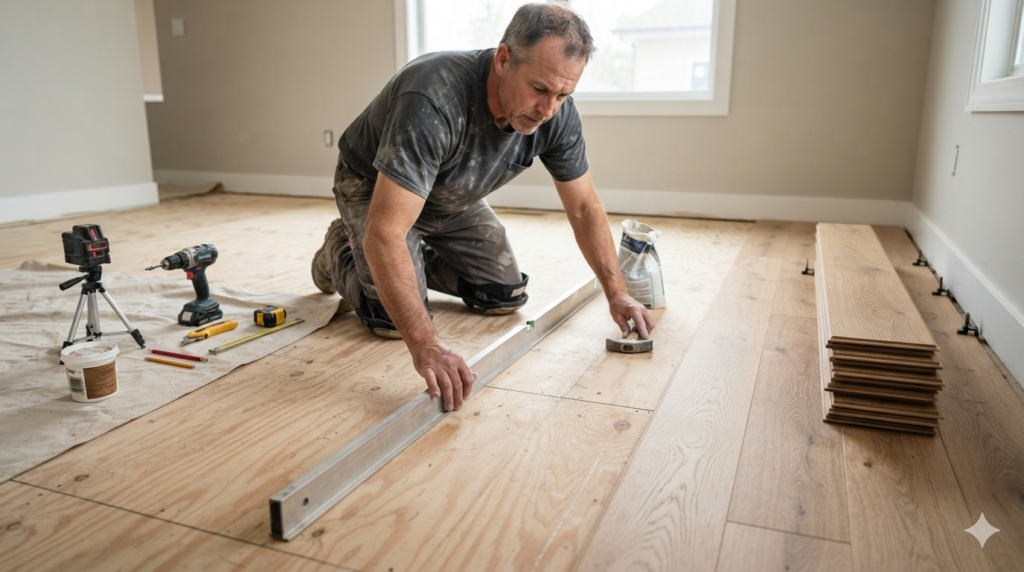
Floor Leveling
Modern wide-plank and floating floors can require a flat surface.
If the floor contains:
- Low areas
- High spots
- Cracks
- Uneven transitions
the installer may need to perform additional preparation.
Floor leveling can include:
- Grinding
- Sanding
- Patching
- Self-leveling compound
- Subfloor repair
Skipping preparation may result in:
- Movement
- Clicking
- Gaps
- Cracked tile
- Uneven surfaces
A beautiful flooring material cannot compensate for an improperly prepared base.
Underlayment Cost
Underlayment can serve several purposes:
- Sound reduction
- Moisture protection
- Cushioning
- Thermal separation
- Minor surface smoothing
Current 2026 data places underlayment for a 500-square-foot project at roughly $250 to $2,700, depending on product and installation requirements.
Not every flooring system needs a separate underlayment.
Some products include attached padding.
Moisture Barriers
Moisture is especially important over concrete slabs and below-grade spaces.
A moisture problem can damage:
- Hardwood
- Laminate
- Adhesives
- Subfloors
Before installation, professionals may perform moisture testing.
Addressing moisture before covering the floor can prevent expensive failures later.
Baseboards and Trim
Replacing flooring may affect existing baseboards.
Options include:
- Remove and reinstall baseboards
- Install new baseboards
- Add shoe molding
- Add quarter-round
New trim makes the project feel complete but adds:
- Material
- Carpentry
- Caulking
- Painting
Ask whether baseboards are included in the flooring quote.
Door and Transition Costs
Different rooms may use different floor materials.
Transition strips can connect:
- Hardwood to tile
- Carpet to vinyl
- Tile to laminate
Door casings may also need trimming so flooring fits neatly beneath them.
Professional installation should account for these finishing details.
Stair Flooring Cost
Stairs can be surprisingly expensive because each step requires individual cutting and finishing.
Possible components include:
- Tread
- Riser
- Stair nose
- Trim
- Landing
Labor can be much greater per square foot than on a simple open room.
If your quote includes stairs, ask for them to be priced separately so you understand their effect on the budget.
Flooring Labor Cost
Labor depends on installation method.
Common methods include:
- Floating
- Glue-down
- Nail-down
- Staple-down
- Mortar-set tile
A floating laminate floor is generally faster to install than an intricate marble tile pattern.
Labor also increases with:
- Small rooms
- Closets
- Angled walls
- Islands
- Built-ins
- Stairs
- Decorative patterns
Do not assume labor will be identical simply because two flooring materials have similar purchase prices.
Example $5,000 Flooring Budget
| Category | Example |
|---|---|
| Flooring material | $2,500 |
| Installation labor | $1,200 |
| Old flooring removal | $400 |
| Underlayment | $300 |
| Baseboard/trim work | $200 |
| Transitions | $100 |
| Contingency | $300 |
| Total | $5,000 |
Example $15,000 Whole-Home Flooring Budget
| Category | Example |
|---|---|
| Flooring materials | $8,000 |
| Installation | $3,500 |
| Demolition/disposal | $1,000 |
| Subfloor repairs | $700 |
| Underlayment | $600 |
| Trim and transitions | $500 |
| Furniture moving/misc. | $200 |
| Contingency | $500 |
| Total | $15,000 |
Actual projects can vary widely.
Best Flooring for Different Rooms
Living Room
Popular choices:
- Hardwood
- Engineered hardwood
- LVP
- Laminate
Bedroom
Popular choices:
- Carpet
- Hardwood
- LVP
- Laminate
Basement
Moisture-resistant options are often preferred.
Laundry Room
Consider:
- Tile
- LVP
- Other water-resistant materials
Entryway
Durability matters because of:
- Dirt
- Shoes
- Water
- Heavy traffic
Porcelain tile and durable hard-surface flooring can work well.
Best Flooring for Pets
Pet owners often prioritize:
- Scratch resistance
- Water resistance
- Easy cleaning
- Traction
Hard surfaces may be easier to clean than carpet, although extremely smooth floors can be slippery.
Luxury vinyl and certain durable laminates are popular choices.
Hardwood can work but may show scratches depending on wood hardness and finish.
Best Flooring for Rental Properties
Rental-property owners often care about:
- Purchase cost
- Installation speed
- Durability
- Repairability
- Cleaning
LVP and laminate are frequently considered because of their balance between price and appearance.
However, the cheapest possible flooring is not always the lowest-cost option over many tenant cycles.
Where to Save Money
Use a Simple Layout
Straight installation generally uses less labor and material.
Avoid Unnecessary Demolition
If the existing flooring can safely remain underneath, installation may be cheaper.
Choose Mid-Range Material
Premium-looking flooring is available without purchasing the most expensive product.
Complete Multiple Rooms Together
Large continuous projects can sometimes be more efficient than several small jobs.
Compare Full Quotes
Make sure removal, preparation, transitions, and trim are included.
Where Not to Cut Costs
Subfloor Preparation
Bad preparation can ruin new flooring.
Moisture Testing
Especially important over concrete and in moisture-prone locations.
Correct Adhesive
Use products specified for the flooring system.
Expansion Space
Floating and wood floors require proper installation allowances.
Tile Waterproofing Where Required
Tile itself does not automatically create a waterproof assembly.
Questions to Ask a Flooring Installer
- Is removal included?
- Is disposal included?
- Is subfloor preparation included?
- How will unexpected subfloor damage be priced?
- Is underlayment included?
- Are transitions included?
- Are baseboards included?
- Who moves furniture?
- Who moves appliances?
- How much waste material should I order?
- What installation method will be used?
- Does the flooring need acclimation?
- How long before furniture can return?
- What workmanship warranty is provided?
- What is excluded from the estimate?
Flooring Installation Mistakes to Avoid
Ordering Exactly the Measured Square Footage
You generally need extra material for cuts and waste.
Ignoring the Subfloor
A damaged subfloor can create problems no matter how expensive the new finish material is.
Choosing Flooring Based Only on Appearance
Consider moisture, pets, children, traffic, cleaning, and durability.
Forgetting Transition Heights
New flooring can interfere with doors and appliances.
Installing Wood Before Acclimation
Follow manufacturer requirements.
Ignoring Expansion Requirements
Some flooring needs room for seasonal movement.
Frequently Asked Questions
How much does flooring installation cost in 2026?
For a 500-square-foot project, current national data puts professional flooring installation around $1,528 to $4,859, with an average near $3,159.
How much is flooring per square foot?
A broad current planning range is roughly $3 to $22 per square foot, although premium or complex installations can exceed it.
How much does hardwood flooring cost?
Current 2026 project data places many hardwood installations around $2,469 to $7,033.
How much does laminate flooring cost?
Current project estimates average around $2,997, with many laminate installations ranging between approximately $1,471 and $4,657.
Is tile expensive to install?
Tile installation can be relatively labor intensive. Current estimates place many tile installations around $15 to $20 per square foot.
Should flooring go under kitchen cabinets?
Installation approach depends on the flooring system and cabinet design. Floating floors generally require special consideration because they must be able to expand and contract.
How much extra flooring should I buy?
Around 10% extra is a common starting point for many standard layouts, though complex patterns may need more.
Final Thoughts
Flooring installation cost is determined by much more than the price printed on the sample in the store.
A complete flooring budget may include:
- Material
- Waste
- Installation
- Demolition
- Disposal
- Subfloor work
- Leveling
- Moisture protection
- Underlayment
- Baseboards
- Transitions
- Stairs
- Furniture moving
For a typical 500-square-foot project, current 2026 data places the national average at around $3,159, but the final amount can vary dramatically depending on material choice and preparation.
Choose flooring according to how the room is actually used, not simply how a small showroom sample looks.
Most importantly, do not spend your entire budget on premium material while ignoring the surface underneath it.
A properly prepared subfloor and skilled installation can make even moderately priced flooring look excellent and perform reliably for years.