Water damage is one of the home problems where waiting can quickly make the final repair bill larger.
A burst pipe, leaking water heater, overflowing appliance, roof leak, plumbing failure, sewage backup or flooded basement can damage flooring, drywall, insulation, cabinets, trim, framing and electrical systems.
In 2026, the average U.S. water damage restoration project costs approximately $3,868. Most homeowners spend about $1,383 to $6,369, while the broad range can extend from roughly $450 to $16,000 depending on the amount of water, contamination level and severity of damage.
Water damage restoration also carries particularly strong homeowner urgency.
Unlike a cosmetic renovation that can often wait several months, active water problems generally need prompt attention.
This guide explains what homeowners can expect to pay for extraction, drying, drywall repairs, flooring repairs, basement cleanup, mold remediation and other common parts of a restoration project.
Average Water Damage Restoration Cost in 2026
Current national pricing shows:
| Water Damage Project | Approximate Cost |
|---|---|
| Minor restoration | From about $450 |
| Typical homeowner range | $1,383–$6,369 |
| National average | $3,868 |
| Major restoration | Up to $16,000+ |
| Water damage per sq. ft. | $3–$7.50 |
| Drywall repair | $300–$850 |
| Flooring repair | $200–$3,000 |
| Ceiling repair | $450–$1,600 |
| Basement repair/restoration | $500–$2,800+ |
| Plumbing-related repairs | $350–$4,000 |
| Mold removal | $1,200–$3,800 |
Actual contractor pricing depends on property location, contamination, affected materials, emergency timing and reconstruction requirements.
Water Damage Restoration Cost per Square Foot
A common national estimate is approximately $3 to $7.50 per square foot.
Square-foot pricing is useful for early planning, but it cannot capture every factor.
For example, 300 square feet of clean water that is extracted quickly can be much easier to restore than 300 square feet affected by contaminated sewage that has saturated drywall, insulation and flooring.
The type of material matters as well.
Tile, hardwood, laminate, carpet and drywall respond differently to moisture.
What Does Water Damage Restoration Include?
Water restoration commonly involves two major stages: mitigation and reconstruction.
Mitigation focuses on stopping ongoing damage.
That may include identifying the source, shutting off water, extracting standing water, opening wet wall cavities, removing unsalvageable materials, installing air movers and running dehumidifiers.
Reconstruction involves rebuilding the home after it has been dried.
That may include new drywall, paint, insulation, flooring, trim, cabinets and other damaged components.
Some restoration companies perform both stages.
Others handle drying and mitigation before transferring reconstruction to another contractor.
Why Water Category Matters
Not all water is equally safe.
Restoration professionals may classify water according to the level of contamination.
Clean Water
Clean water generally originates from relatively sanitary sources.
A clean supply-line leak, for example, is normally easier to restore than a sewage backup.
Even clean water can still cause significant property damage when it remains in contact with drywall, flooring or wood.
Gray Water
Gray water contains a greater level of contamination.
It may require additional sanitation and material removal.
Black Water
Black water can contain dangerous contamination and requires more extensive safety procedures.
Sewage backup is an obvious example.
Homeowners should avoid unnecessary contact with contaminated water and use qualified professionals for significant contaminated-water losses.
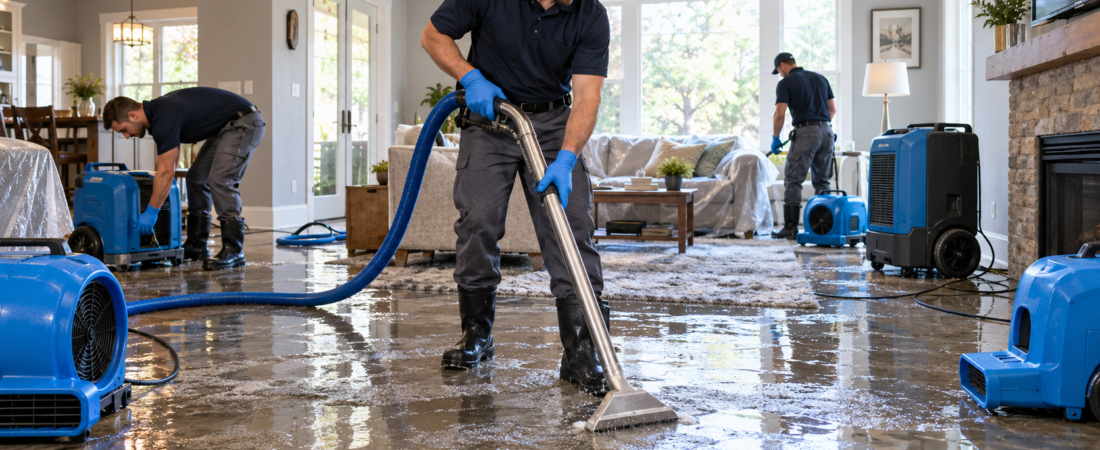
Emergency Water Extraction
Removing standing water is one of the first steps in restoration.
Commercial extraction equipment can remove much more water than normal household tools.
The price depends on the size of the area, water depth, accessibility, contamination and whether emergency service is required outside normal business hours.
A restoration estimate may separately charge for extraction, equipment setup, equipment rental, demolition and reconstruction.
Ask what is included before authorizing work.
Image Placement
Insert the generated water-extraction living-room image here.
Alt Text: Water restoration technicians extracting standing water from a flooded living room.
Structural Drying and Dehumidification
A floor can appear dry while significant moisture remains in the building.
Water can travel underneath flooring, into subfloors, behind baseboards, through drywall and into insulation.
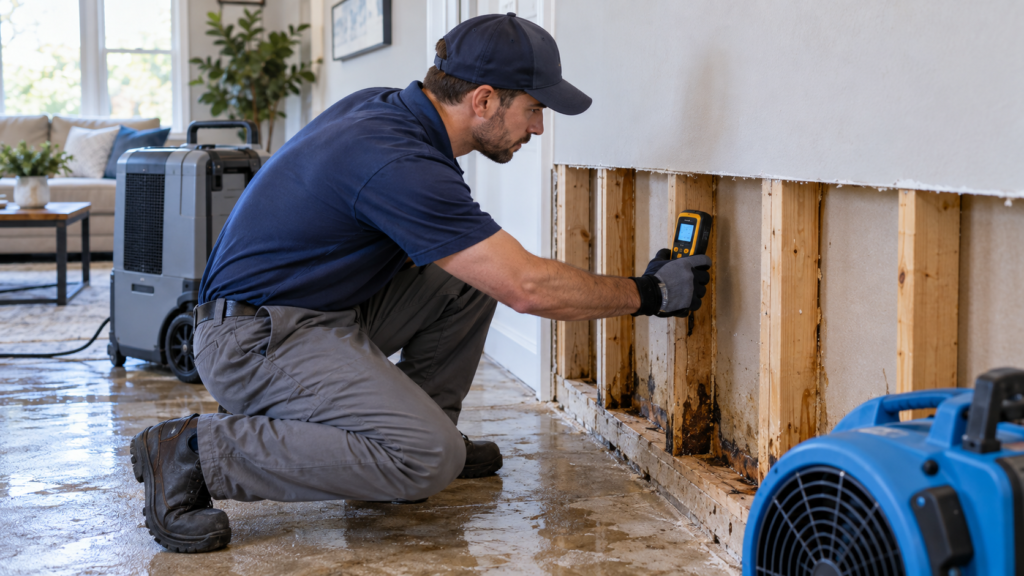
Commercial air movers and dehumidifiers are commonly used to speed drying.
Technicians may also use moisture meters to monitor progress.
The U.S. Environmental Protection Agency recommends drying wet or damp materials within approximately 24 to 48 hours where possible to help reduce the potential for mold growth.
This is one reason prompt response matters.
Drywall Water Damage Repair Cost
Water-damaged drywall commonly costs approximately $300 to $850 to repair, with a current average around $550.
Water can move upward through drywall beyond the visible water line.
Restoration professionals may therefore remove a section above the visibly damaged area.
The total drywall repair cost may include demolition, disposal, replacement drywall, joint finishing, texture matching, priming, paint and baseboard work.
Flooring Water Damage Repair Cost
Current estimates put water-damaged flooring repair at around $200 to $3,000 for many projects.
The flooring material makes a major difference.
Carpet
Carpet and padding absorb water rapidly.
Clean-water incidents may sometimes be dried successfully if addressed quickly.
Contaminated carpeting may require removal.
Hardwood
Hardwood can cup, crown, warp or separate after significant moisture exposure.
Some floors can be dried and refinished.
Others require partial or complete replacement.
Laminate
Laminate flooring can swell when the inner material absorbs moisture.
Significant water damage frequently requires replacement.
Vinyl
Water-resistant vinyl itself may survive, but water can become trapped underneath and affect adhesive or subflooring.
Tile
Ceramic and porcelain tiles resist water well, but grout and the materials underneath may still become saturated.
Ceiling Water Damage Repair
Water-damaged ceiling repairs commonly cost approximately $450 to $1,600 depending on severity.
Before repairing the ceiling, the source must be located.
Common causes include roof leaks, bathrooms located on the floor above, air-conditioning drain problems and plumbing leaks.
A ceiling that is heavily saturated or sagging can present a safety risk.
Basement Water Damage Cost
Basement water damage can result from plumbing problems, sump-pump failure, foundation leakage, drainage problems, sewer backup or flooding.
Current estimates place many basement water-damage projects between around $500 and $2,800 or more, depending heavily on the depth and contamination of the water.
An unfinished basement may be less expensive to restore because fewer finished materials are present.
A finished basement can involve carpet, drywall, insulation, cabinetry, furniture and electrical work.
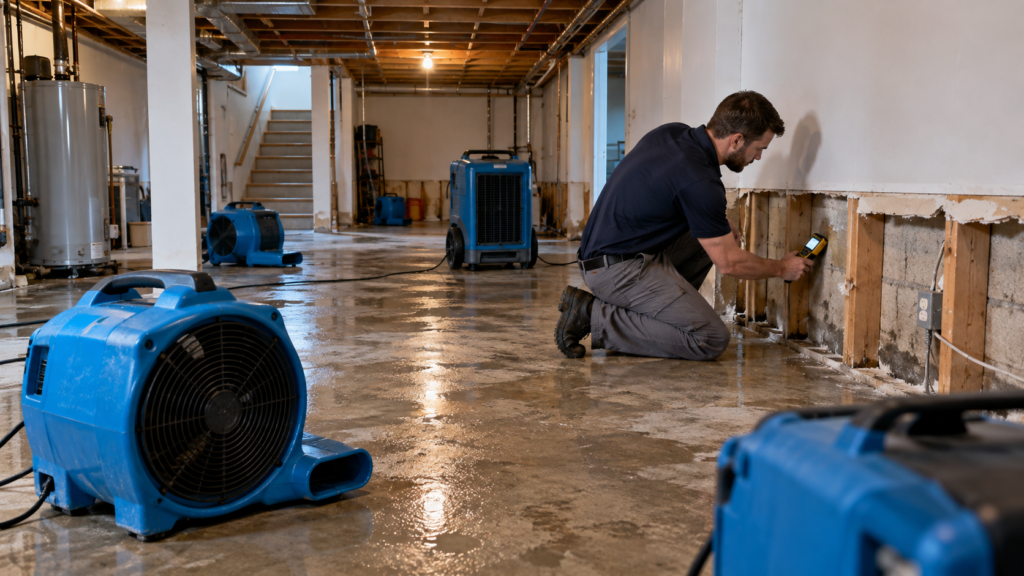
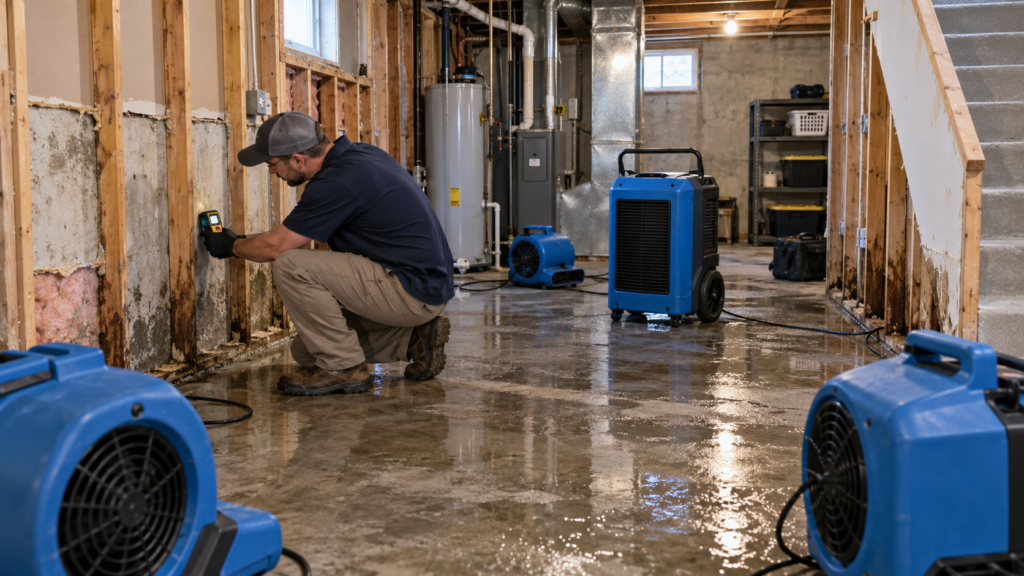
Image Placement
Insert generated basement restoration image here.
Alt Text: Professional technician inspecting basement water damage with commercial drying equipment.
Plumbing Repairs After Water Damage
Repairing the water damage does not eliminate the need to repair its source.
Plumbing-related repairs may cost roughly $350 to $4,000 depending on what failed.
A small fitting is very different from replacing hidden piping inside walls.
The homeowner may therefore receive separate invoices from the plumber and restoration contractor.
Burst Pipe Water Damage
Burst pipes can release large amounts of water quickly.
Damage can spread across several rooms or even between floors.
The total may include plumbing repairs, extraction, drying, drywall removal, insulation, painting, flooring and repairs to cabinetry or electrical systems.
The faster the source is stopped, the greater the chance of reducing the final restoration scope.
Water Heater Failure
Water heaters can release significant amounts of water when a tank fails.
If installed in a garage or unfinished basement, damage may be relatively limited.
A water heater located next to finished rooms can create much larger losses.
The replacement cost of the water heater itself is separate from restoration work.
Dishwasher and Washing Machine Leaks
Appliances are another common source of indoor water damage.
Dishwasher supply lines, washing-machine hoses, refrigerator water lines and drain connections can all leak.
Slow appliance leaks can be especially damaging because they may remain hidden behind cabinetry or equipment.
By the time swelling or staining becomes visible, moisture may already have spread beneath the floor.
Roof Leak Water Damage
Water entering through a roof can affect attic insulation, decking, ceilings, walls and flooring.
Current 2026 data places many roof water-damage repairs around $400 to $2,000, although actual roof repairs or replacement may add significantly more.
This creates a perfect internal-link opportunity to HomeCostPilot’s Roof Replacement Cost in 2026 guide.
Mold Remediation Cost
Mold remediation after water damage can become a significant additional expense.
Current national data places mold removal around $1,200 to $3,800, with an average close to $2,225.
Moisture control is the key issue.
The EPA recommends promptly correcting the source and drying water-damaged materials within 24 to 48 hours where possible.
Simply painting over discoloration does not address the underlying moisture problem.
Image Placement
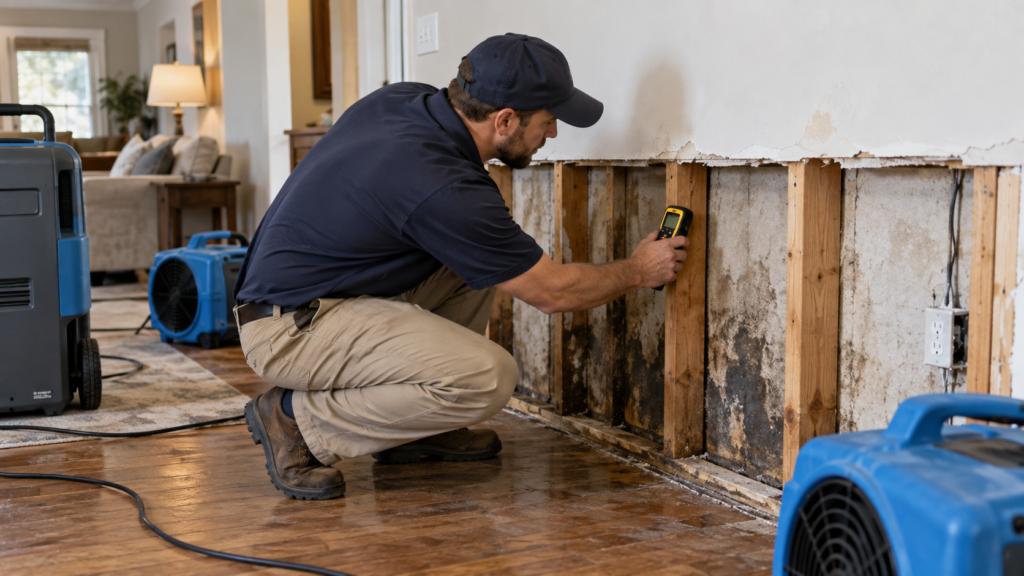
Insert generated moisture-inspection/wall image here.
Alt Text: Water restoration specialist checking moisture inside an opened wall after a leak.
When Wet Materials Need Replacement
Not every wet material can necessarily be saved.
Nonporous surfaces may often be cleaned and dried.
Porous materials can be much more difficult.
The EPA notes that some absorbent materials affected by mold or prolonged moisture may require replacement.
Examples can include carpet padding, ceiling tiles, insulation and heavily damaged drywall.
A restoration professional should assess what can realistically be dried and what should be removed.
Does Homeowners Insurance Cover Water Damage?
Coverage depends heavily on how the water entered the home and the specific insurance policy.
The Insurance Information Institute explains that standard homeowners insurance may cover certain sudden water losses such as burst pipes or wind-driven rain, while water rising from outside sources such as river flooding generally requires separate flood coverage.
Gradual leaks and maintenance-related damage can also be treated differently from sudden accidental losses.
Always check your own policy and insurer.
Flood Insurance vs. Homeowners Insurance
One of the most important distinctions is between an internal water-loss event and external flooding.
A burst supply pipe inside the home is not the same insurance event as floodwater entering from an overflowing river.
Homeowners in flood-prone areas should understand what their standard policy excludes and whether separate flood insurance is appropriate for their property.
What to Document After Water Damage
If it is safe, document the affected areas before major cleanup begins.
Photos and video can show standing water, damaged flooring, ceiling stains, damaged contents and the apparent source.
Keep restoration estimates, plumbing invoices, receipts, equipment records and contractor documentation.
However, do not delay urgent safety measures solely to collect documentation.
Water Damage Safety
Standing water can create electrical and contamination hazards.
Do not enter an area where water may be in contact with energized electrical systems.
Avoid direct contact with sewage or heavily contaminated water.
Sagging ceilings and structurally damaged materials can also be dangerous.
When the situation involves significant flooding, sewage, electricity or structural concerns, use appropriate qualified professionals.
DIY Cleanup vs. Professional Restoration
A small amount of clean water on a hard surface can often be handled by a homeowner.
Professional help becomes much more important when water has entered wall cavities, affected several rooms, saturated carpet and insulation, involved sewage or remained undiscovered for an extended period.
Professional equipment also allows technicians to detect moisture that is not visually obvious.
How Long Does Water Damage Restoration Take?
The timeline depends on the extent of damage.
Initial extraction might take hours.
Structural drying can require several days.
Reconstruction can take considerably longer.
Large projects involving custom cabinets, flooring or extensive drywall replacement may take weeks.
Ask the restoration company to separate the timeline into mitigation, drying and reconstruction phases.
How to Choose a Water Damage Restoration Company
Look beyond the first price quoted over the phone.
A professional estimate should explain the affected area, extraction work, equipment charges, anticipated drying period, demolition, cleaning, disposal and reconstruction.
Homeowners should also check applicable licensing, insurance and references and obtain multiple estimates when the situation allows.
For an active emergency, stopping additional damage may need to take priority over extensive quote shopping.
Questions to Ask the Restoration Company
Ask what equipment is being installed and how it is charged.
Ask how often moisture levels will be checked.
Ask which materials the company expects to remove.
Ask whether reconstruction is included.
Ask whether emergency or after-hours rates apply.
Ask whether the company provides documentation that may be useful for an insurance claim.
Ask whether plumbing, roofing or electrical work requires separate contractors.
How to Reduce Water Damage Costs
Fast action is one of the best ways to limit the scale of restoration.
Stop the water source when it is safe to do so.
Repair plumbing and roof leaks promptly.
Inspect washing-machine hoses and appliance connections periodically.
Maintain gutters and exterior drainage.
Test sump pumps.
Watch for ceiling stains and musty odors.
Consider water-leak detection devices in vulnerable areas.
Preventing a small leak from becoming a major moisture problem can save thousands of dollars.
Preventing Basement Water Damage
Keep gutters and downspouts functional.
Direct water away from the foundation.
Maintain sump pumps.
Inspect basement walls after storms.
Address foundation and drainage problems.
The EPA also recommends keeping ground drainage directed away from the foundation as part of moisture-control practices.
Preventing Mold After a Leak
Mold prevention starts with moisture removal.
Dry wet areas promptly.
Use dehumidification when needed.
Remove materials that cannot be adequately cleaned or dried.
Correct the source before closing walls or installing new finishes.
The EPA’s central recommendation is straightforward: control moisture and dry affected areas quickly.
Image Placement
Insert generated fully restored living-room image here.
Alt Text: Living room after professional water damage restoration and drying.
Frequently Asked Questions
How much does water damage restoration cost in 2026?
The current national average is approximately $3,868, while most projects fall between about $1,383 and $6,369.
How much does water restoration cost per square foot?
Typical restoration costs average roughly $3 to $7.50 per square foot depending on severity and contamination.
How much does mold remediation cost?
Current national estimates commonly range from approximately $1,200 to $3,800.
How much does water-damaged drywall cost to repair?
Many drywall repairs cost around $300 to $850.
How much does water-damaged flooring cost to repair?
Current typical estimates range from approximately $200 to $3,000, depending heavily on flooring type and severity.
Can mold begin after only a few days?
Yes. The EPA recommends drying water-damaged materials within approximately 24 to 48 hours where possible to help prevent mold growth.
Does homeowners insurance cover water damage?
Certain sudden losses such as burst pipes may be covered, while flooding from external rising water generally requires different coverage. Actual coverage depends on the policy.
Should I replace wet drywall?
Heavily saturated or contaminated drywall may need to be removed rather than dried in place.
Final Thoughts
Water damage restoration can range from a relatively small cleanup to a major reconstruction project.
The biggest cost factors include the amount of water, contamination level, affected square footage, materials involved and how long the property remains wet.
Current national data shows an average project around $3,868, but serious restoration projects can cost much more.
The most important priority is to stop the source safely and limit additional moisture exposure.
After that, homeowners can evaluate extraction, structural drying, demolition and reconstruction separately.
A detailed restoration estimate should clearly explain what will be removed, what will be dried, how equipment is billed and whether reconstruction is included.
Recommended Internal Links:
Roof Replacement Cost in 2026
Basement Remodeling Cost in 2026
Flooring Installation Cost in 2026
Whole House Renovation Cost in 2026
HVAC Replacement Cost in 2026
How Costs Are Calculated
Recommended High-Intent Ad/SEO Concepts: emergency water restoration, restoration contractor, homeowners insurance, flood insurance, plumbing repair, mold remediation, basement waterproofing, leak detection, flooring replacement, contractor estimates.
Editorial Note: Cost figures are national planning estimates. Actual restoration prices and insurance coverage depend on the property, location, contractor and individual policy.