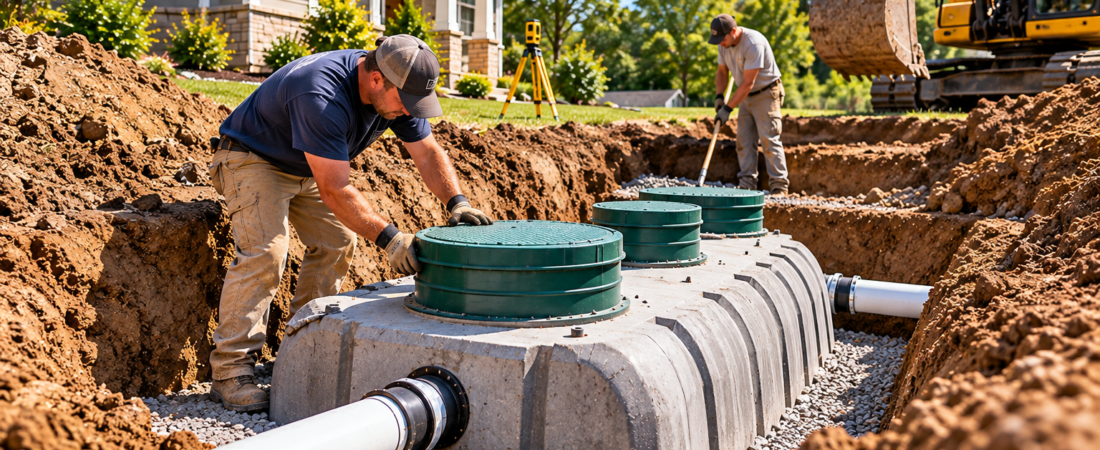
For properties that are not connected to a municipal sewer network, the septic system quietly handles one of the most essential functions in the home.
When it fails or reaches the end of its useful life, however, replacement becomes a substantial site and construction project.
Current 2026 U.S. data places many professional septic installations between approximately $3,593 and $12,463, with a national average around $8,017. More complicated alternative systems can reach $10,000 to $20,000 or more, while replacing both the tank and drain field commonly falls around $5,000 to $12,000. (angi.com)
The homeowner usually cannot choose the lowest-cost tank and stop there.
Site characteristics such as soil, lot size, groundwater, slope, bedroom count, local health rules, and available drain-field area influence the type of system that can be approved.
2026 Septic Cost Overview
| Septic Project | Typical 2026 Planning Cost |
|---|---|
| New septic installation | $3,593–$12,463 |
| National installation average | ~$8,017 |
| Tank + drain-field replacement | $5,000–$12,000 |
| Basic anaerobic replacement | ~$3,000–$8,000 |
| Aerobic system | ~$10,000–$20,000 |
| Mound system | ~$10,000–$20,000 |
| Perc/soil testing | ~$700–$2,000 |
| Typical septic repair | $627–$3,043 |
What Makes Up a Septic System?
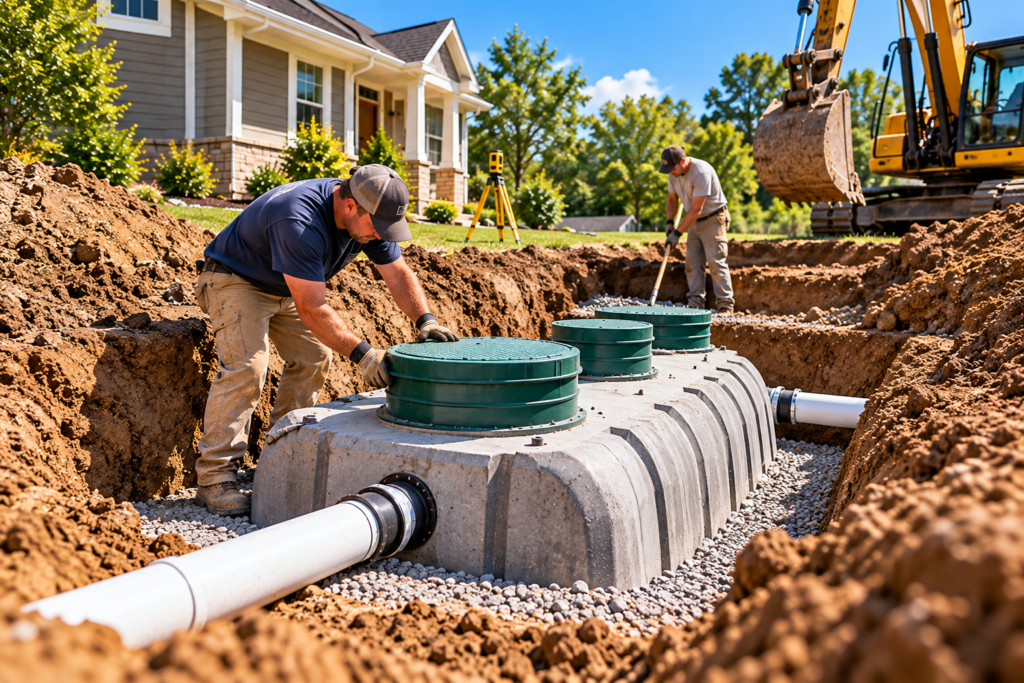
A typical conventional system includes:
- a pipe leaving the home
- a septic tank
- a distribution system
- a drain field
- surrounding soil
Wastewater flows into the tank.
Solids settle while liquid effluent moves toward the drain field.
The soil then plays an important role in treatment.
The EPA identifies the tank, drain field, and soil as major components of onsite wastewater systems. (nepis.epa.gov)
Because wastewater eventually interacts with the surrounding environment, septic installation is locally regulated.
Septic Tank Cost by Capacity
Required tank size is often related partly to the number of bedrooms.
Current 2026 tank-only pricing provides a useful reference:
| Home Size | Example Tank Size | Tank Cost |
|---|---|---|
| 1 bedroom | ~500 gallons | $500–$900 |
| 2 bedrooms | ~750 gallons | $700–$1,200 |
| 3–4 bedrooms | ~1,000 gallons | $900–$1,500 |
| 5–6 bedrooms | ~1,200 gallons | $1,200–$1,600 |
| Larger homes | ~1,500 gallons | $1,500–$2,500 |
These figures cover the tank rather than the complete installed system. (angi.com)
Final sizing must follow local code.
Concrete Tanks
Concrete tanks are common and can be highly durable.
Their weight means installation normally involves excavation equipment.
Over time, possible concerns can include cracking and material deterioration.
Plastic Tanks
Plastic can provide a lighter, lower-cost option.
Current material-only pricing places some plastic tanks at roughly $500 to $2,000. (angi.com)
Whether plastic is allowed or appropriate depends on local rules and site conditions.
Fiberglass Tanks
Fiberglass is another corrosion-resistant option.
Current material pricing can reach about $1,200 to $7,500 depending on tank size and configuration. (angi.com)
The Drain Field Can Be the Bigger Issue
The tank receives much of the attention because it is the component most homeowners recognize.
But the drain field is equally important.
It distributes treated effluent into suitable soil.
If the drain field has failed, replacing the tank alone may not solve the problem.
Current estimates place tank-and-drain-field replacement at roughly $5,000 to $12,000, depending on design and site conditions. (angi.com)
Conventional Gravity Systems
A conventional gravity system is generally among the simpler septic arrangements.
It can be practical where:
- the soil drains appropriately;
- the lot has enough room;
- groundwater conditions are suitable;
- the site elevation works.
Where those conditions are not present, a more expensive system may be required.
Aerobic Treatment Units
Aerobic systems include additional treatment equipment.
They may be used or required in certain site conditions.
Because they have more mechanical components than a simple gravity system, they can involve:
- electricity
- service contracts
- inspections
- maintenance
- higher installation cost
Current replacement estimates can reach approximately $10,000 to $20,000. (angi.com)
Mound Systems
A mound system creates an elevated treatment area where the native soil does not support a conventional drain field.
The project can require:
- fill
- pumps
- engineering
- distribution components
- additional site work
Current pricing can also reach roughly $10,000 to $20,000. (angi.com)
Soil Testing and Perc Tests
Before designing a new field, the property may need a percolation test or another form of soil evaluation.
The goal is to determine how suitable the site is for wastewater treatment.
Current 2026 planning figures place testing around $700 to $2,000 in many projects. (angi.com)
Procedures vary by jurisdiction.
Some health departments rely on soil evaluation methods rather than a traditional perc test.
Permitting Costs
Septic systems can be regulated by:
- environmental-health departments
- county health agencies
- local building departments
- state authorities
Current guides show that permits for a full replacement can sometimes reach $460 to $2,770, although the exact cost varies by location. (angi.com)
Excavation and Earthwork
Installation can require heavy equipment and significant site disturbance.
Contractors may need to:
- excavate the tank area
- shape or dig the drain field
- transport soil
- bring in approved fill
- restore disturbed ground
- access the property with excavation equipment
A flat open yard is generally easier than a steep, wooded, or constrained lot.
Why Soil Conditions Matter So Much
The ground beneath the property can dramatically change the system design.
Common challenges include:
- heavy clay
- shallow bedrock
- steep slopes
- high groundwater
- poor drainage
- limited usable land
Any of these conditions may require a more expensive engineered system.
That is why online price calculators cannot reliably predict the final number without site-specific evaluation.
Repair or Replacement?
Current 2026 septic repair costs average around $1,829, with many projects between roughly $627 and $3,043. (angi.com)
Repair may be enough for:
- broken lids
- baffle damage
- pumps
- limited piping defects
- certain distribution issues
Replacement becomes more likely when:
- the tank is structurally unsafe;
- the drain field has failed;
- major components are deteriorated;
- the system is undersized;
- the site no longer meets requirements.
Common Failure Signs
Possible warning signs include:
- household drains becoming slow;
- sewage backing up;
- persistent odors;
- wastewater on the surface;
- wet drain-field areas;
- unusually green grass over the field;
- repeated pumping that does not solve the underlying problem.
Never enter a septic tank.
Septic tanks can contain dangerous gases and require qualified professionals.
Maintenance Can Prevent Much Larger Costs
The U.S. EPA recommends that the average household septic system be inspected at least every three years, while typical tanks are pumped every three to five years, depending on wastewater use, household size, tank size, and solids accumulation. Systems with mechanical components may need more frequent inspection. (epa.gov)
Routine pumping is inexpensive compared with premature failure of the drain field.
How to Protect the Drain Field
EPA homeowner guidance recommends:
- keeping vehicles off the drain field;
- controlling tree roots;
- directing sump and roof water away;
- using household water efficiently. (epa.gov)
Too much water can interfere with treatment.
Heavy vehicles can damage components or compact the soil.
Septic Additives Do Not Replace Maintenance
Some products are marketed as substitutes for regular septic servicing.
A functioning septic system still needs proper inspection and pumping.
Do not rely on additives as a replacement for professional maintenance.
Example Septic Budget
Consider a three-bedroom rural property.
Possible project costs:
Soil/site evaluation: $1,200
Permit/design: $800
1,000-gallon tank: $1,300
Excavation: $2,000
Distribution/drain field: $4,500
Plumbing connection: $1,000
Site restoration: $800
Example total: $11,600
This is only an illustration.
A property requiring a mound system or advanced treatment can cost substantially more.
Ways to Spend More Carefully
Find out what system the property actually requires before shopping for equipment.
Obtain multiple bids based on the same approved design.
Protect the existing drain field from unnecessary damage.
And maintain records such as:
- inspection reports
- permits
- system drawings
- pumping receipts
- repair invoices
These can be useful for both future contractors and future buyers.
Financial Assistance
Replacing a failed septic system can create a significant financial burden.
Depending on location, assistance may be available through:
- county programs
- state environmental programs
- USDA rural programs
- local financing programs
The EPA maintains information on funding resources for onsite wastewater systems. (epa.gov)
Eligibility varies, so homeowners need to confirm current local rules.
Frequently Asked Questions
How much does a new septic system cost in 2026?
Many current installations fall between $3,593 and $12,463, with a national average of about $8,017. (angi.com)
What does tank-and-drain-field replacement cost?
A common current range is about $5,000 to $12,000. (angi.com)
How often should the tank be pumped?
EPA guidance says household tanks are generally pumped every three to five years, although actual timing varies by usage and system characteristics. (epa.gov)
Can a homeowner build over the drain field?
Building, paving, or parking over the field can interfere with treatment and access. Confirm plans with the local authority and a qualified septic professional.
Can I install whatever tank size I want?
No. Local requirements and system design determine tank capacity.
Does a failed drain field always require a new tank too?
No. A professional inspection should identify which components have actually failed.
Final Thoughts
A septic installation is much larger than the purchase of a tank.
The complete project may involve:
- engineering
- soil testing
- permits
- excavation
- piping
- tank
- pumps
- drain field
- inspections
- site restoration
Current national installation pricing averages about $8,017, but individual properties can vary widely. (angi.com)
The best starting point is to find out what the soil and local regulations allow before comparing system prices.
For an existing functioning system, regular pumping, inspections, responsible water use, and drain-field protection can help avoid much more expensive failures.
HomeCostPilot Note: Septic requirements vary significantly between U.S. jurisdictions. Use this guide for planning only and confirm system design, permits and installation requirements with qualified local professionals and the appropriate environmental-health authority.