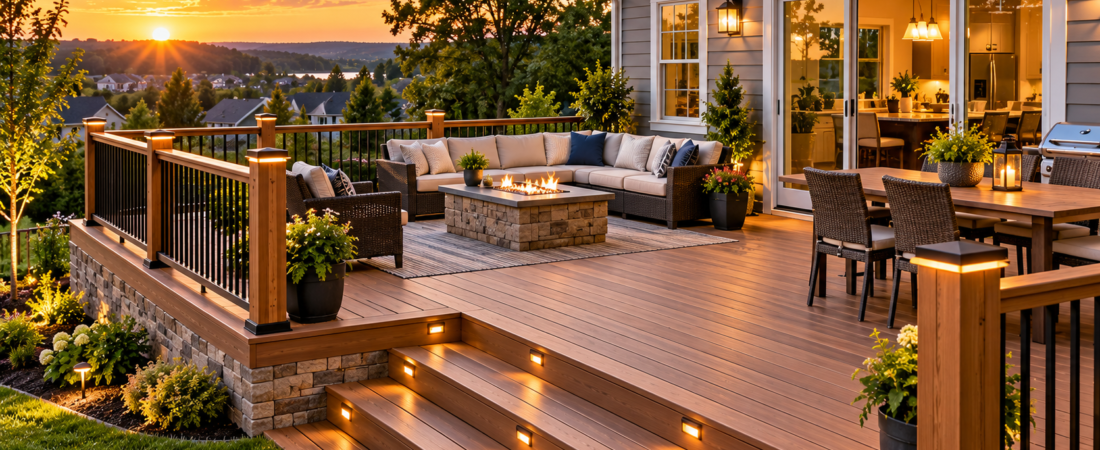
A deck can create usable outdoor living space without the cost of enclosing a full addition.
The budget, however, can vary dramatically.
A low, simple pressure-treated platform is a very different project from a second-story composite deck with long stairs, lighting, premium guardrails, and a covered roof.
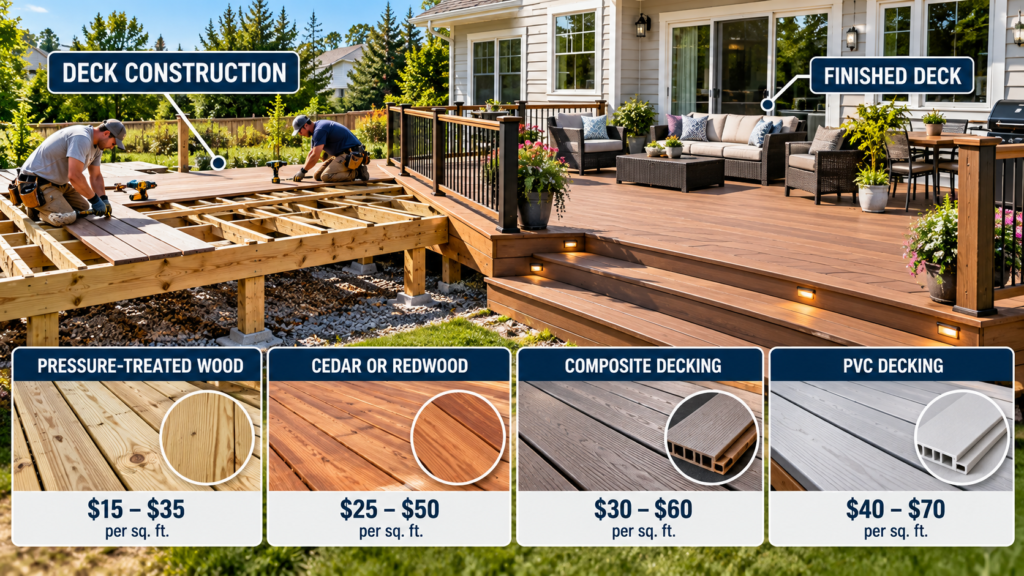
Current 2026 data places professional deck construction around $4,340 to $12,652 for many projects, with a national average of about $8,320. A common installed planning range is approximately $30 to $60 per square foot, although premium, elevated, and highly customized decks can cost more. (angi.com)
Pressure-treated wood remains one of the more economical choices. Current 2026 pricing places many complete pressure-treated deck projects around $4,000 to $12,000, with an average near $8,000. (angi.com)
2026 Deck Cost Overview
| Project | Typical 2026 Planning Cost |
|---|---|
| Typical professional deck | $4,340–$12,652 |
| National average | ~$8,320 |
| Installed price | ~$30–$60 per sq. ft. |
| Pressure-treated deck | $4,000–$12,000 |
| 10×10 deck | ~$4,000–$6,000 |
| 12×20 deck | ~$9,600–$14,400 |
| 16×20 deck | ~$12,800–$19,200 |
| 20×20 deck | ~$16,000–$24,000 |
| Typical permit allowance | ~$230–$500+ |
(angi.com)
Deck Cost by Size
Square footage is one of the main cost drivers.
Current 2026 national planning figures provide the following examples:
| Deck Size | Area | Typical Cost |
|---|---|---|
| 10 × 10 | 100 sq. ft. | $4,000–$6,000 |
| 10 × 12 | 120 sq. ft. | $3,600–$7,200 |
| 12 × 12 | 144 sq. ft. | $5,760–$8,640 |
| 12 × 16 | 192 sq. ft. | $5,400–$10,800 |
| 12 × 20 | 240 sq. ft. | $9,600–$14,400 |
| 14 × 20 | 280 sq. ft. | $11,200–$16,800 |
| 16 × 20 | 320 sq. ft. | $12,800–$19,200 |
| 20 × 20 | 400 sq. ft. | $16,000–$24,000 |
These figures are planning ranges rather than contractor bids. Height, material, structural complexity, and site conditions can change the final total. (angi.com)
Pressure-Treated Wood
Pressure-treated lumber remains one of the traditional budget-friendly materials for residential decks.
Current decking-board material pricing can run around $2 to $5 per square foot, but the complete installed deck costs much more once framing, foundations, railing, hardware, stairs, and labor are included. (angi.com)
The lower initial cost is attractive, but ownership includes maintenance.
Over time, a wood deck may require:
- cleaning
- sealing
- staining
- replacement boards
- fastener repairs
A lower purchase price does not automatically mean lower lifetime cost.
Composite Decking
Composite products typically cost more at the beginning.
Current material estimates place composite decking around $12 to $22 per square foot before the rest of the deck structure is included. (angi.com)
Homeowners often choose composite for:
- lower routine finishing requirements
- fewer splinters
- consistent appearance
- broad color selection
However, composite is not one uniform product.
Prices differ by:
- brand
- product line
- fastening system
- color
- cap technology
- profile
- warranty
Cedar
Cedar appeals to homeowners who prefer a natural wood appearance.
Current material pricing can fall around $3 to $7 per square foot. (angi.com)
It still requires maintenance.
Redwood
Redwood can range from approximately $5 to $35 per square foot in material cost, depending on grade and local availability. (angi.com)
Regional supply can strongly affect the price.
Tropical Hardwood
Premium woods such as ipe can cost significantly more.
Current planning data places ipe around $10 to $20 per square foot for decking material. (angi.com)
These dense hardwoods can be durable, but installation may also require special fasteners, tools, and more labor.
Aluminum
Aluminum decking is less common than wood or composite.
Current material pricing is roughly $15 to $20 per square foot. (angi.com)
It may appeal in specific climates or applications where homeowners value durability and low maintenance.
Height Can Change Everything
A ground-level deck and an elevated deck may have the same floor area but very different structural requirements.
A second-story project may need:
- taller posts
- stronger structural members
- more bracing
- guardrails
- stairs
- larger footings
- engineered connections
- additional safety measures during construction
That increases both labor and material costs.
Foundations and Footings
Deck loads need to transfer safely into the ground.
Depending on project design and climate, the support system may use:
- concrete piers
- poured footings
- approved helical systems
- frost-depth foundations
Current pressure-treated deck pricing shows that foundation preparation can cost approximately $150 to $300 per post in difficult or uneven soil. (angi.com)
The decorative surface is only one part of the deck.
Structural Framing
The structural system can include:
- beams
- posts
- joists
- blocking
- ledgers
- fasteners
- metal connectors
Failures in these components can be dangerous, especially when the deck is elevated.
Connections between an attached deck and the house deserve careful attention.
Attached or Freestanding?
An attached deck transfers some structural load through its connection with the house.
A freestanding deck carries its own support structure.
The right choice depends on:
- house construction
- location
- foundation
- project design
- local requirements
A freestanding system may be useful when attaching to the house is impractical or undesirable.
Railing Can Be a Major Line Item
Homeowners often focus on the floor area and overlook the guardrail.
A large elevated deck may contain a substantial amount of railing.
Common options include:
- pressure-treated wood
- cedar
- composite
- aluminum
- glass
- cable
Premium railing systems can become one of the most expensive finish components.
Ask the contractor to price railing separately.
Stair Costs
Deck stairs add:
- stringers
- framing
- treads
- landings
- handrails
- guardrails
- footings
A high deck with a long staircase can cost significantly more than a deck with the same platform area but no stairs.
Adding a Roof
A roof turns the project into a more complex outdoor structure.
Additional work may include:
- columns
- beams
- roof framing
- shingles or metal panels
- flashing
- gutters
- engineering
- electrical work
A covered deck should be budgeted separately from an open platform.
Outdoor Kitchens and Built-In Features
Higher-end decks may include:
- built-in seating
- grills
- countertops
- sinks
- refrigerators
- heaters
- fireplaces
- televisions
- storage
These additions can push the project into a much higher cost category.
Electrical Upgrades
Electrical work may be added for:
- outlets
- stair lights
- railing lighting
- heaters
- ceiling fans
- landscape lighting
Outdoor wiring and fixtures must be appropriate for exterior exposure, and qualified electrical professionals should be used where required.
Deck Permits
Many decks require permits because they are structural and can involve fall hazards.
Current general data places many permit costs around $230 to $500, although some jurisdictions charge more. (angi.com)
Permit rules may depend on:
- size
- height
- stairs
- whether the deck is attached
- setbacks
- zoning
Check local requirements.
Setbacks and Property Restrictions
Having enough physical yard space does not always mean the desired deck can be built.
Restrictions may include:
- rear setbacks
- side setbacks
- easements
- utility corridors
- HOA requirements
Verify these before materials are purchased.
Underground Utilities
Deck footings require digging.
In the United States, homeowners and contractors can use 811 procedures to have underground utility lines marked before excavation.
This should be part of project planning.
Replacing an Existing Deck
Demolition increases cost.
An old deck may require removal of:
- boards
- railing
- stairs
- framing
- hardware
- concrete footings
Do not assume existing framing is automatically suitable for new premium composite decking.
Its condition and structural design should be evaluated.
Repair or Replace?
Repair can make sense when:
- only surface boards are damaged;
- railing needs limited work;
- the main structure is still sound;
- deterioration is localized.
Replacement becomes more reasonable when:
- posts are deteriorated;
- joists are badly damaged;
- ledger connections are unsafe;
- the footings are failing;
- rot is widespread.
New deck boards do not make an unsafe frame safe.
Example 12×20 Composite Deck Budget
A 240-square-foot project might look like this:
Site preparation: $1,000
Footings: $1,500
Structural framing: $4,000
Composite decking: $4,500
Railing: $3,000
Stairs: $1,500
Permit: $400
Electrical lighting: $600
Example total: $16,500
This is an example only.
Real prices can be significantly different.
Ways to Control Cost
Simple shapes usually cost less than curved or multi-level designs.
Lower decks can be less complex than tall structures.
Material selection can dramatically change cost.
Do not oversize the deck merely because space is available.
And compare complete quotes that include:
- footings
- framing
- boards
- railing
- stairs
- demolition
- permits
- cleanup
Wood or Composite?
Wood generally has the lower initial cost.
Composite usually costs more upfront but can reduce the need for routine staining and sealing.
The better long-term choice depends on:
- planned ownership period
- local climate
- maintenance preferences
- initial budget
The board price alone does not tell the full story.
How Long Does Construction Take?
The project schedule depends on:
- weather
- permits
- inspections
- contractor availability
- design complexity
- material delivery
A straightforward deck may move relatively quickly once approvals and materials are ready.
A custom multi-level structure can take much longer.
Frequently Asked Questions
How much does a deck cost in 2026?
Current national data places many professionally constructed decks between approximately $4,340 and $12,652, with an average around $8,320. (angi.com)
What is a useful cost-per-square-foot estimate?
A current planning range is roughly $30 to $60 per square foot. (angi.com)
What does a 12×20 deck cost?
Current planning data places many 12×20 projects around $9,600 to $14,400. (angi.com)
Does composite usually cost more than wood?
Yes, upfront. Current material estimates place composite around $12 to $22 per square foot, compared with roughly $2 to $5 for pressure-treated decking boards. (angi.com)
Do decks need permits?
Many do, especially elevated or attached decks. Requirements depend on local building and zoning rules.
Can homeowners build their own decks?
Some people build simple low decks themselves, but structural framing, footings, elevated work, and code compliance make professional involvement valuable on larger projects.
Final Thoughts
A homeowner may see inexpensive deck boards at a store and wonder why a finished deck costs many thousands of dollars.
The reason is that the walking surface is only one part of the system.
A complete deck can require:
- excavation
- footings
- posts
- beams
- joists
- connectors
- decking
- railing
- stairs
- lighting
- permits
- demolition
- labor
Current national project costs average about $8,320, while larger elevated or composite projects can easily move into five figures. (angi.com)
Design the deck around how the space will actually be used, and prioritize the structural foundation and framing before spending heavily on decorative upgrades.