How Much Does an Electrical Panel Upgrade Cost in 2026?
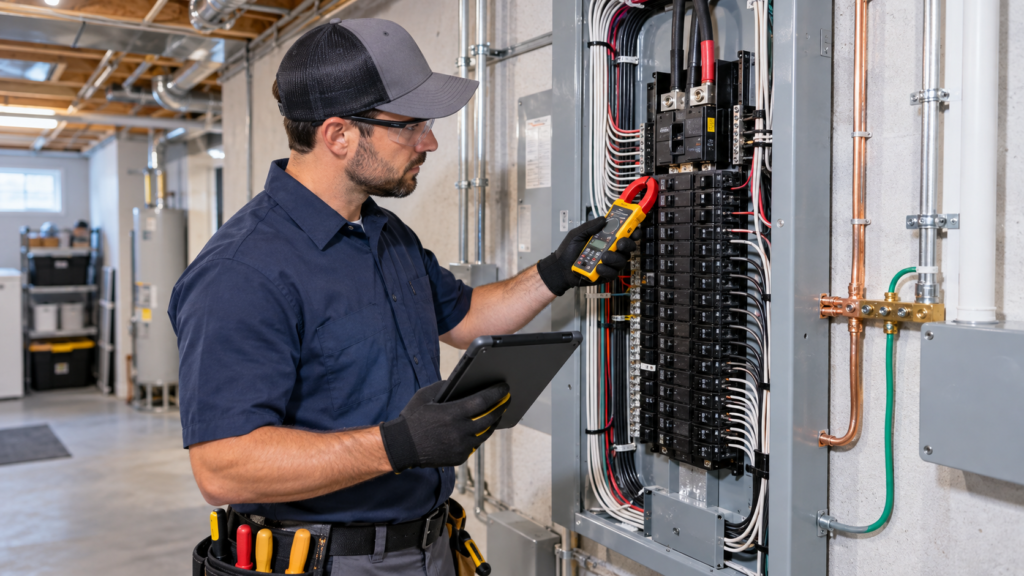
Modern homes use substantially more electricity than many older electrical systems were originally designed to handle.
Central air conditioning, electric ranges, heat pumps, clothes dryers, hot tubs, workshops, induction cooking, electric vehicles and other high-load equipment can make an older electrical service feel increasingly limited.
In 2026, a professional electrical panel upgrade commonly costs approximately $1,200 to $2,000, although more extensive upgrades can reach roughly $4,500 depending on the home’s wiring, service size, meter equipment, panel location and utility requirements.
A 200-amp service upgrade is especially common in homes that need greater electrical capacity.
Many professional 200-amp service upgrades fall around $750 to $2,500, depending on whether the job involves only the panel or also requires new service conductors, meter equipment, grounding and utility work.
The final price can be much higher if outdated wiring needs correction or if the panel must be relocated.
Electrical Panel Upgrade Cost at a Glance
| Electrical Project | Approximate Cost |
|---|---|
| Typical professional panel upgrade | $1,200–$2,000 |
| Broad professional upgrade range | $1,000–$4,500 |
| 100-amp panel replacement | $850–$1,600 |
| 200-amp service upgrade | $1,300–$2,500 |
| 400-amp service upgrade | $2,000–$4,000+ |
| Fuse box to breaker panel | $1,100–$4,000 |
| Subpanel installation | $500–$1,500+ |
| New meter equipment | $300–$1,500+ |
| Permit and inspection | Varies by location |
| Panel relocation | Can add $1,000+ |
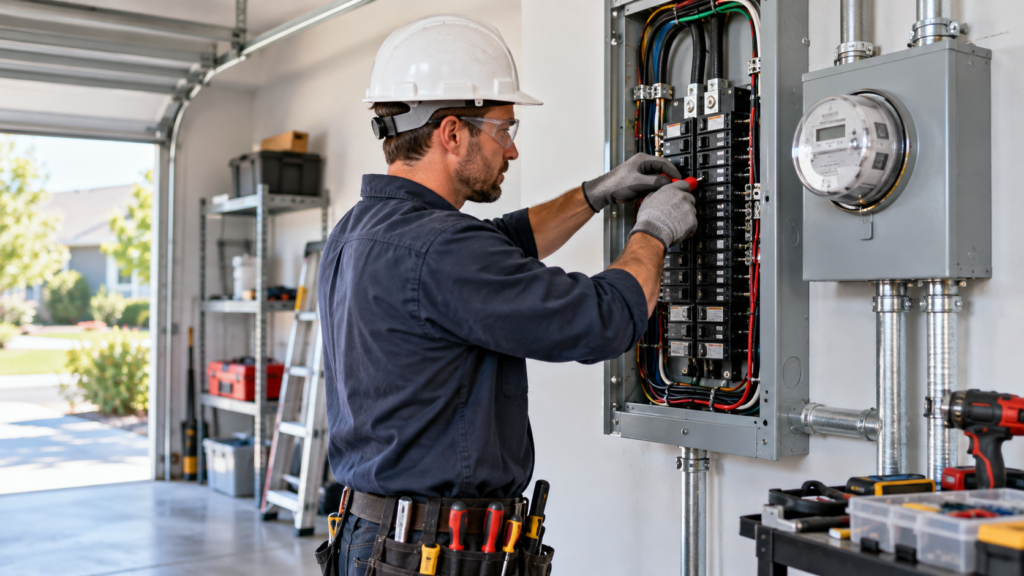
These are planning ranges rather than guaranteed contractor prices.
What Does an Electrical Panel Do?
The electrical panel is the main distribution point for electricity entering a home.
Power from the utility reaches the panel and is then distributed to individual circuits throughout the property.
Each circuit is protected by a breaker.
If electrical current exceeds safe limits, the breaker disconnects the circuit.
The panel therefore plays an important role in both capacity and electrical safety.
Older homes may have smaller services that were sufficient decades ago but are less practical for today’s appliances and electrical loads.
What Does 100 Amp vs. 200 Amp Mean?
The amp rating describes the electrical service capacity available to the home.
A 100-amp service may be adequate for a smaller property with moderate electrical usage.
A 200-amp service is common in modern homes and allows more room for high-demand appliances and additional circuits.
A 400-amp service is generally used in larger properties or homes with unusually high electrical demand.
A larger panel is not automatically necessary.
The correct service size should be determined using the home’s actual electrical load.
100-Amp Panel Replacement Cost
Replacing an existing 100-amp panel may cost approximately $850 to $1,600 depending on the panel, labor and existing wiring.
A simple panel replacement will generally cost less than replacing both the panel and the incoming electrical service.
Costs may increase when the project requires:
- New service entrance cable
- Meter replacement
- Grounding upgrades
- Circuit rewiring
- Panel relocation
- Drywall repair
- Utility coordination
- Additional code corrections
Older homes can be particularly unpredictable because problems may only become visible once the existing equipment is opened.
200-Amp Service Upgrade Cost
Upgrading to 200 amps is one of the most common electrical service projects for U.S. homeowners.
A typical 200-amp upgrade may cost around $1,300 to $2,500, although complex projects can exceed this range.
The price depends on how much of the existing electrical system can remain.
A straightforward replacement may involve:
- New 200-amp panel
- Main breaker
- New grounding
- New meter socket
- Service conductors
- Permit
- Inspection
More complicated projects can involve utility-company work or moving the service entrance.
Why Homeowners Upgrade to 200 Amps
A 200-amp service provides additional electrical capacity.
Common reasons include:
- Adding an EV charger
- Installing central air conditioning
- Installing a heat pump
- Adding an electric range
- Converting from gas to electric appliances
- Remodeling a kitchen
- Adding a home addition
- Installing a hot tub
- Adding a workshop
- Installing solar equipment
- Increasing circuit capacity
Homeowners planning several major electrical upgrades should discuss all future equipment with their electrician before choosing a new panel.
400-Amp Service Upgrade Cost
Very large homes or properties with unusually high electrical demand may require 400-amp service.
A professional 400-amp service upgrade often costs around $2,000 to $4,000 or more.
Complex installations can cost considerably more.
A 400-amp upgrade may require:
- Larger service conductors
- New meter equipment
- Multiple electrical panels
- Utility-company modifications
- New grounding
- Permit and inspection
- Additional installation labor
A 400-amp service should normally be installed only when actual load calculations justify the additional capacity.
Electrical Panel Replacement vs. Electrical Service Upgrade
These terms sound similar but are not always the same.
Panel Replacement
A panel replacement can involve removing an old breaker box and installing a newer panel while keeping the same service size.
For example:
Old 200-amp panel → new 200-amp panel.
Service Upgrade
A service upgrade increases the electrical capacity available to the home.
For example:
100 amps → 200 amps.
This may require changes beyond the breaker panel itself.
The meter, service conductors and utility connection may also require upgrades.
This difference can explain why two electrician quotes for seemingly similar jobs may vary significantly.
Fuse Box Replacement Cost
Some older homes still use fuse boxes rather than modern circuit-breaker panels.
Replacing a fuse box with a breaker panel may cost approximately $1,100 to $4,000.
The final price depends on the electrical service size and the condition of the existing wiring.
During a fuse-box conversion, an electrician may discover outdated wiring or other issues requiring additional work.
Subpanel Installation Cost
A subpanel can provide additional circuit capacity without replacing the home’s main electrical panel.
Subpanels are commonly added for:
- Garages
- Workshops
- Home additions
- Pool equipment
- Outdoor buildings
- EV chargers
- Home offices
A typical residential subpanel installation may cost around $500 to $1,500 or more, depending on capacity, wiring distance and installation complexity.
When Should You Upgrade an Electrical Panel?
Homeowners may consider an electrical panel upgrade when:
- Breakers frequently trip
- The home still has an old fuse box
- The panel has limited available breaker spaces
- An EV charger is being installed
- A major HVAC system is being upgraded
- The kitchen is being remodeled
- Several high-load appliances are being added
- The home is being expanded
- Existing equipment is damaged or obsolete
Frequent breaker trips should be professionally diagnosed.
A tripping breaker does not always mean the entire panel needs replacement.
Signs Your Electrical Panel May Need Attention
Common warning signs include:
- Burning smell near the panel
- Buzzing or crackling noises
- Warm or hot breaker panel
- Scorch marks
- Flickering lights
- Frequent breaker trips
- Loose breakers
- Visible corrosion
- Water intrusion
- Damaged wiring
- Breakers that will not reset
Some of these conditions can be serious electrical hazards.
Do not remove the service-panel cover yourself to investigate exposed electrical components.
Electrical Panel Upgrade for an EV Charger
Electric vehicles are increasing demand for home electrical upgrades.
Level 2 EV chargers may require a dedicated 240-volt circuit.
However, installing an EV charger does not automatically mean you need a new electrical panel.
An electrician should evaluate:
- Existing service capacity
- Current household load
- Charger amperage
- Available breaker spaces
- Distance from panel to charger
- Other future electrical upgrades
Some homes have enough existing capacity.
Others may need a service upgrade before a high-powered EV charger can be installed.
Suggested Image Placement
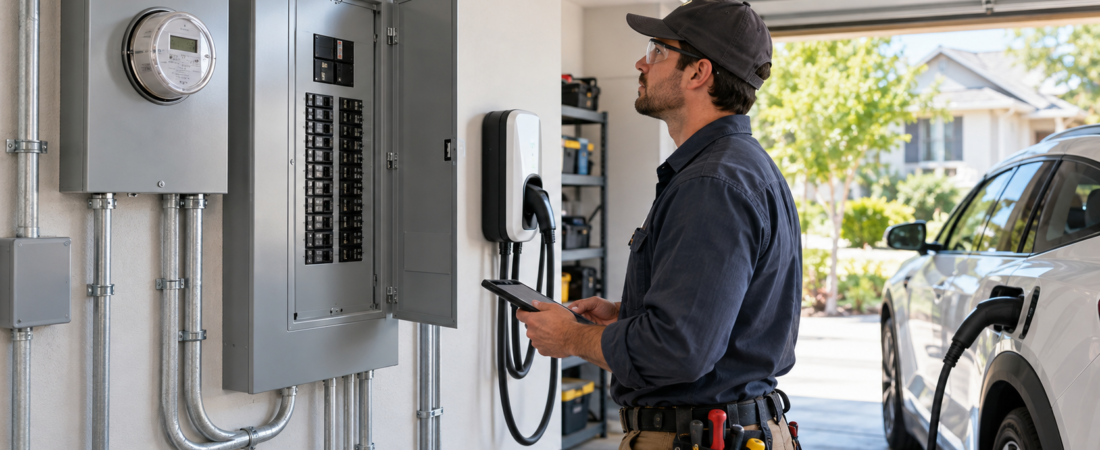
Use the generated garage image showing:
Electrician + electrical panel + EV charger + electric vehicle
Alt Text: Electrician inspecting a residential electrical panel during an EV charger installation.
Electrical Upgrade for HVAC Systems
HVAC projects can place major demands on the electrical system.
Homeowners installing:
- Heat pumps
- Central air conditioners
- Electric furnaces
- Mini-split systems
- Electric water heaters
may need to confirm whether their current electrical service can support the additional load.
This article should internally link to your:
HVAC Replacement Cost in 2026
guide.
That creates a strong topical relationship between two high-commercial-intent home improvement categories.
Electrical Upgrades During Kitchen Remodeling
Modern kitchens can contain several high-powered appliances.
Examples include:
- Electric range
- Induction cooktop
- Double wall oven
- Dishwasher
- Microwave
- Refrigerator
- Garbage disposal
- Wine cooler
Many appliances require dedicated circuits.
A major kitchen renovation may therefore reveal that the existing electrical panel has insufficient space or capacity.
Electrical work should be included early in the remodeling budget.
Panel Upgrade During Whole-House Remodeling
A major renovation is an ideal time to evaluate electrical infrastructure.
Walls may already be open, making new circuit installation easier.
The homeowner may also be adding:
- New lighting
- HVAC equipment
- Appliances
- Smart-home systems
- Home offices
- Security equipment
- EV charging
- Solar
- Battery storage
Planning these systems together can help avoid upgrading the electrical panel twice.
What Affects Electrical Panel Upgrade Cost?
Several major factors determine the contractor quote.
Existing Service Size
Replacing a panel without changing service capacity is generally easier than upgrading from 100 amps to 200 or 400 amps.
Panel Location
An easily accessible garage or basement panel can be less complicated than a panel located inside finished walls.
Wiring Condition
Old or damaged wiring may require additional repairs.
Meter Equipment
A larger service may require a new meter socket.
Utility Requirements
The utility may need to disconnect and reconnect service.
Panel Relocation
Moving a panel can significantly increase labor and material cost.
Permits
Electrical service work commonly requires permits and inspection.
Local Labor Costs
Electrician rates vary substantially between U.S. cities.
Electrician Labor Cost
Licensed electricians commonly charge around $50 to $130+ per hour depending on location, licensing level and project complexity.
Electrical-panel projects are frequently quoted as a complete job rather than purely hourly.
Labor may include:
- Removing old equipment
- Installing the new panel
- Connecting circuits
- Grounding
- Meter work
- Service wiring
- Testing
- Labeling circuits
- Coordinating inspection
A more complicated electrical service can require multiple electricians.
Electrical Permit and Inspection Costs
Panel upgrades commonly require permits.
Permit cost varies by city and county.
Some contractors include permit fees in their bid.
Others add them separately.
Ask whether the quote includes:
- Permit application
- Electrical inspection
- Utility coordination
- Reinspection if necessary
- Final approval
This makes contractor quotes easier to compare accurately.
Will the Power Be Off During a Panel Upgrade?
Usually yes.
Electrical service needs to be disconnected during at least part of the project.
A straightforward panel replacement may leave the home without electricity for several hours.
More complicated work may take longer.
Ask the electrician about the expected outage before installation day.
Homeowners working remotely may want to arrange another location for the day.
How Long Does an Electrical Panel Upgrade Take?
A straightforward panel replacement may often be completed in one working day.
More complex upgrades can take longer.
The total project timeline can also depend on:
- Permit approval
- Utility scheduling
- Electrical inspection
- Equipment availability
- Service relocation
- Required repairs
Physical installation time and total project duration are therefore not always the same.
Electrical Panel Upgrade and Solar Panels
Solar installations can interact with the home’s electrical panel.
Some properties can accommodate solar without replacing the panel.
Others may need electrical upgrades.
The solar installer and electrician should evaluate the existing service before the homeowner commits to equipment.
Solar systems can also involve additional disconnects, breakers and utility requirements.
Electrical Panel Upgrade and Battery Storage
Home battery systems are becoming more common.
Depending on the equipment and home configuration, battery storage may require modifications to the electrical system.
Homeowners considering solar plus battery storage should mention those plans when requesting a panel-upgrade estimate.
This can help prevent future redesign.
Electrical Panel Upgrade and Home Generators
Standby generators may require transfer switches or other electrical modifications.
The generator installer should verify the home’s electrical system and panel configuration.
Some electrical work can potentially be coordinated during a panel upgrade.
Electrical Panel Upgrade and Home Insurance
Some homeowners discover electrical issues while changing insurers or buying an older home.
Insurance companies can have requirements regarding certain old electrical equipment or outdated wiring.
Requirements vary by insurer.
A modern panel does not automatically guarantee cheaper insurance, but correcting outdated electrical equipment may remove potential underwriting concerns.
Does a New Electrical Panel Increase Home Value?
Electrical-panel upgrades are usually performed for capacity or safety rather than appearance.
Buyers may still view updated electrical infrastructure positively, particularly if the house can support:
- Modern HVAC
- EV charging
- Electric appliances
- Solar
- Home offices
- Additional circuits
However, homeowners should not assume a panel upgrade will return its entire cost through resale.
DIY Electrical Panel Upgrade: Is It Worth It?
No.
Electrical-panel work is not an appropriate DIY project.
The service equipment contains dangerous electrical energy.
Improper installation can cause:
- Electric shock
- Electrocution
- Electrical fire
- Equipment damage
- Code violations
Service upgrades also involve permits, inspections and utility coordination.
Use a properly qualified electrician.
How to Compare Electrician Quotes
Get detailed written proposals.
The quote should identify:
- New service amperage
- Panel manufacturer
- Main breaker size
- Number of breaker spaces
- Existing circuit transfer
- New breakers
- Service entrance work
- Meter work
- Grounding
- Permit
- Inspection
- Utility coordination
- Cleanup
- Drywall repair
- Warranty
Do not compare only the final total.
One quote may include meter and service work that another quote excludes.
Should You Choose the Cheapest Electrician?
Not automatically.
Electrical work affects the safety of the entire house.
An unusually low quote may omit permits, utility work, code corrections or equipment included in another estimate.
Compare qualifications, project scope, warranty and equipment along with price.
Ways to Reduce Electrical Panel Upgrade Cost
Plan your future electrical needs before choosing the new service.
For example, tell your electrician if you intend to add:
- EV charging
- Heat pump
- Electric range
- Hot tub
- Solar
- Battery storage
- Home addition
It may be less expensive to plan capacity once than to upgrade the system again later.
You can also obtain multiple quotes and compare identical scopes.
Avoid trying to save money by skipping permits or using unqualified labor.
Should You Upgrade From 100 Amps to 200 Amps?
For many modern homes, 200 amps provides useful additional capacity.
However, the correct answer depends on the home’s electrical load.
A smaller property with gas appliances may function perfectly well with 100 amps.
A large all-electric home with EV charging may need significantly more.
A professional load calculation should guide the decision.
200 Amp vs. 400 Amp Service
200 Amp
Common for modern single-family homes.
Can support numerous appliances, HVAC systems and other electrical loads when properly designed.
400 Amp
Typically used in:
- Very large homes
- Luxury properties
- Multiple EV households
- Large workshops
- Heavy electric heating
- Significant outdoor equipment
- Other unusually high electrical-demand properties
Most average homes do not require 400-amp service.
Is an Electrical Panel Upgrade Worth It?
A panel upgrade can be worthwhile when the existing electrical system prevents the homeowner from safely adding modern equipment.
It can also solve problems related to inadequate capacity or outdated equipment.
However, replacing a functioning panel simply because a larger number sounds better may provide little practical benefit.
The project should solve an actual electrical need.
Frequently Asked Questions
How much does an electrical panel upgrade cost in 2026?
Many professional upgrades cost roughly $1,200 to $2,000, although complex projects may reach approximately $4,500 or more.
How much does it cost to upgrade from 100 amps to 200 amps?
A typical 200-amp service upgrade may cost approximately $1,300 to $2,500, with complex projects costing more.
How much does a 400-amp electrical service cost?
Many residential 400-amp service upgrades cost around $2,000 to $4,000+, depending on utility and installation requirements.
How much does fuse-box replacement cost?
Converting an old fuse box to a breaker panel may cost approximately $1,100 to $4,000.
Do I need 200 amps for an EV charger?
Not necessarily.
The electrician should calculate existing electrical demand and available capacity before recommending an upgrade.
Can I install an electrical panel myself?
Electrical service-panel replacement should be handled by a qualified electrician.
Does an electrical panel upgrade require a permit?
In most U.S. jurisdictions, electrical service changes require permitting and inspection.
Exact requirements vary locally.
How long does panel replacement take?
A straightforward residential replacement can often be completed in a working day.
More complicated service upgrades can take longer.
How long will my electricity be disconnected?
Often several hours during physical installation, although the exact outage depends on the scope and utility process.
Can upgrading the panel help with future renovations?
Yes.
A correctly sized modern panel can make it easier to add future circuits for HVAC, appliances, EV charging, solar and other equipment.
Final Thoughts
Electrical panel upgrade costs depend on much more than the price of the metal breaker box.
The home’s existing electrical service, meter equipment, wiring, utility connection, grounding, panel location, permit requirements and future electrical loads all affect the final price.
For many U.S. homeowners, a typical upgrade may fall around $1,200 to $2,000, while larger service changes can cost several thousand dollars.
A homeowner planning an EV charger, heat pump, kitchen renovation, home addition or solar system should have the electrical system evaluated early.
That allows future power needs to be included in the project from the beginning rather than becoming an expensive surprise later.
Recommended Internal Links
- HVAC Replacement Cost in 2026
- Kitchen Remodeling Cost in 2026
- Whole House Renovation Cost in 2026
- Garage Conversion Cost in 2026
- HomeCostPilot Cost Guides
- How Costs Are Calculated
High-Intent Monetization Topics Naturally Covered
Electrical contractors, licensed electricians, EV chargers, heat pumps, solar installation, backup generators, home batteries, electrical remodeling, smart-home systems, home improvement financing and electrical inspections.
Editorial Note: All prices are national planning estimates. Actual prices vary by contractor, city, electrical system, utility requirements, permits and project complexity.