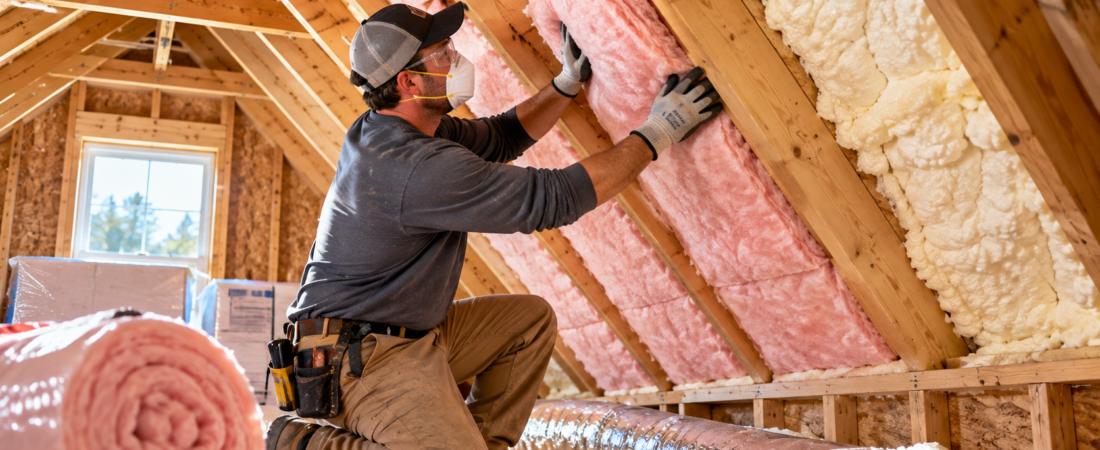
Insulation is one of the least visible upgrades in a home.
Once the project is finished, most of the material disappears into attics, walls, floors, crawl spaces, or basements.
Even so, insulation can have a major effect on comfort because it slows heat transfer between the living space and the environment outside.
Current U.S. pricing places many professional insulation projects between roughly $1,071 and $2,649. A broader HomeAdvisor dataset places many projects between about $498 and $4,500, with an average around $1,852. (angi.com)
Spray foam is typically more expensive. Current 2026 project data puts the national average around $2,888, with many installations falling between approximately $1,455 and $4,337. (angi.com)
2026 Insulation Cost Snapshot
| Project / Material | Typical 2026 Planning Cost |
|---|---|
| General professional insulation project | $1,071–$2,649 |
| Broad insulation pricing | ~$0.40–$6.75 per sq. ft. |
| Blown-in project average | ~$1,661 |
| Blown-in project range | $987–$2,334 |
| Spray foam average | ~$2,888 |
| Spray foam typical project | $1,455–$4,337 |
| Open-cell foam | $0.60–$1.60 per board ft. |
| Closed-cell foam | $1.30–$3.10 per board ft. |
| Whole-home spray foam | Can reach $4,000–$29,000 |
Understanding R-Value
Insulation is usually described using R-value.
R-value measures resistance to conductive heat flow.
In broad terms, higher R-value means greater resistance.
However, that does not mean the highest possible number is automatically right for every house.
The appropriate level depends on:
- climate
- assembly type
- existing insulation
- where the insulation is being installed
- moisture conditions
- local energy requirements
A house in Minnesota and a house in South Florida may need very different insulation strategies.
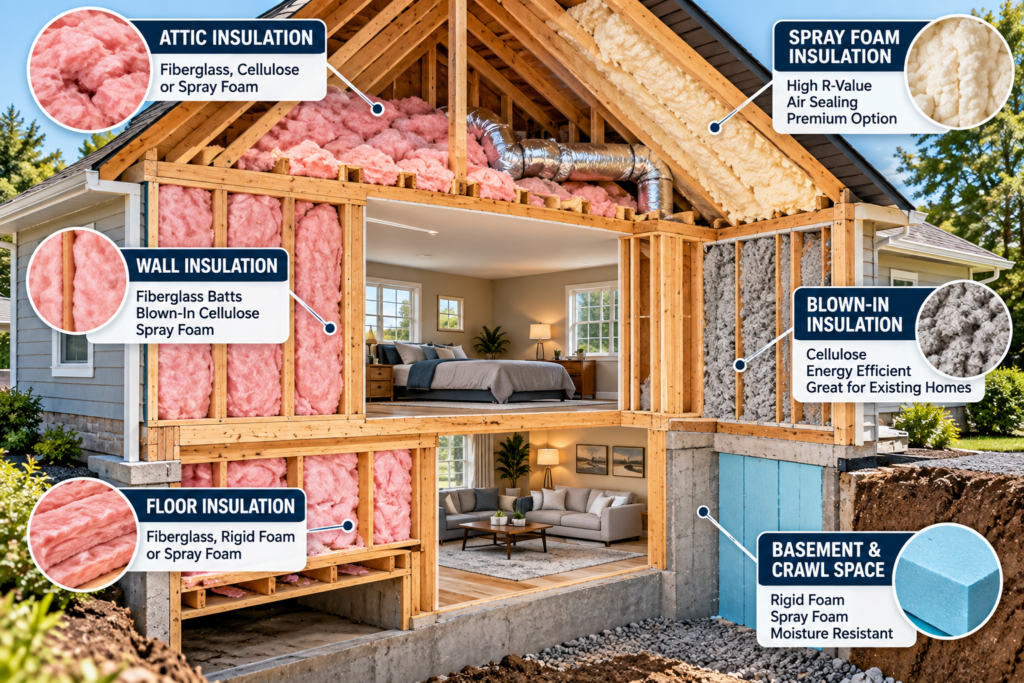
Fiberglass
Fiberglass remains one of the most common insulation materials used in American homes.
It can be installed as:
- rolls
- batts
- blown loose-fill
Where framing is exposed and accessible, fiberglass batts can be relatively economical.
Current comparison data places fiberglass material around $0.30 to $1.50 per square foot, depending on project and product. (angi.com)
The printed R-value assumes correct installation.
Poorly fitted batts can leave:
- gaps
- compressed areas
- voids
- thermal bridges
So installation quality can matter as much as the product label.
Blown-In Insulation
Blown insulation is often used in attics and certain enclosed wall cavities.
Common materials include:
- fiberglass
- cellulose
Current 2026 data places the average blown-in project around $1,661, with many homeowners paying approximately $987 to $2,334. Installed pricing may fall around $1.75 to $7.50 per square foot, depending on material and target performance. (angi.com)
Blown-in material can work well for:
- adding insulation over an existing attic;
- covering irregular spaces;
- filling around obstructions.
Spray Foam
Spray foam begins as a liquid product and expands after application.
The two major categories are open-cell and closed-cell.
Open-Cell Foam
Current installed pricing is roughly:
$0.60 to $1.60 per board foot.
It is lower density and expands significantly.
Closed-Cell Foam
Current installed pricing is roughly:
$1.30 to $3.10 per board foot.
Closed-cell foam is denser and generally produces a higher R-value per inch.
Current data places open-cell products around R-3.5 to R-3.7 per inch and closed-cell products around R-5 to R-7 per inch, depending on product. (angi.com)
What Is a Board Foot?
Spray foam is often sold or estimated by board foot.
One board foot represents:
12 inches × 12 inches × 1 inch thick.
Therefore:
1,000 square feet at 1 inch thick = approximately 1,000 board feet.
1,000 square feet at 3 inches thick = approximately 3,000 board feet.
That is why required foam thickness can strongly affect the final total.
Attic Insulation
The attic is a common place to begin because it is often easier to access than finished walls.
Current spray-foam attic pricing can range from about $1,100 to $9,000, depending on design and size. (angi.com)
Blown-in attic insulation can be considerably less expensive.
Before adding new material, check for:
- roof leaks
- bathroom exhaust problems
- electrical concerns
- pests
- air leakage
- recessed lights
- ventilation issues
Adding insulation on top of an existing problem does not fix the problem.
Wall Insulation
Finished walls are more difficult to insulate because access is limited.
Possible approaches include:
- opening drywall;
- dense-packing through drilled access holes;
- insulating during siding replacement;
- adding insulation as part of a major remodel.
The most economical time to improve wall insulation is often when the wall is already open for another reason.
Crawl-Space Insulation
Crawl spaces can contribute to both comfort and moisture issues.
A project may involve:
- wall insulation
- floor insulation
- air sealing
- drainage
- vapor control
- dehumidification
Current spray-foam crawl-space projects can range around $1,200 to $6,900. (angi.com)
Do not treat insulation separately from moisture.
Standing water or uncontrolled humidity should be addressed at the source.
Basement Insulation
Basement walls can require a moisture-aware insulation strategy.
An inappropriate assembly against damp masonry can create problems.
Current spray-foam basement estimates can range from about $1,500 to $6,200 depending on scope. (angi.com)
Garage Insulation
Garages are often insulated when:
- occupied rooms sit above them;
- homeowners use the garage as a workshop;
- plumbing needs protection;
- attached garage walls affect indoor comfort.
Insulating a garage does not automatically make it conditioned living space.
Ventilation, fire separation, and HVAC design still matter.
Air Sealing Is a Separate Job
Insulation and air sealing do different things.
Insulation slows heat transfer.
Air sealing reduces uncontrolled airflow.
Common leakage points include:
- attic hatches
- top plates
- duct chases
- plumbing penetrations
- electrical penetrations
- recessed fixtures
Current estimates can place professional air sealing around $300 to $1,500 depending on project scope. (angi.com)
Simply adding more insulation over large air leaks may miss an important part of the project.
Removing Existing Insulation
Old insulation may need removal when it is:
- wet
- mold contaminated
- pest contaminated
- badly compressed
- smoke damaged
- blocking necessary repairs
Removal adds labor and disposal cost.
It can also expose hidden problems.
Mold and Moisture
Do not assume insulation itself caused the moisture issue.
Possible sources include:
- plumbing leaks
- roof leaks
- condensation
- poor ventilation
- humid crawl spaces
- groundwater
The source should be addressed first.
Current spray-foam project data shows that mold remediation can add roughly $1,125 to $3,345 when needed. (angi.com)
Older Materials and Asbestos
Some older homes may contain materials that require specialized handling.
If insulation or surrounding material appears suspicious, do not disturb it casually.
Professional testing and remediation may be appropriate.
Climate Matters
Cold Regions
Homeowners may focus on:
- attic insulation
- basement insulation
- rim joists
- air sealing
Hot-Humid Regions
Moisture control, vapor behavior, and air-conditioning performance can become especially important.
Hot-Dry Regions
Attic heat and solar exposure may be larger concerns.
Mixed Climates
Homes experience meaningful heating and cooling seasons, requiring a balanced strategy.
Important 2026 Federal Tax Credit Change
This matters because a large amount of older internet content is now outdated.
The federal Energy Efficient Home Improvement Credit under Section 25C is not available for property placed in service after December 31, 2025.
Homeowners should therefore not assume that a 2026 insulation project still qualifies for the old federal 30% credit.
The IRS states that the credit ended for property placed in service after December 31, 2025. (irs.gov)
State, utility, or local incentives may still be available.
Check current programs for the property before buying materials.
Example Attic Budget
Consider an attic with inadequate insulation.
Possible costs:
Energy assessment: $300
Air sealing: $750
Old contaminated insulation removal: $1,200
New blown insulation: $2,100
Attic hatch treatment: $200
Minor vent corrections: $300
Example project: $4,850
A clean attic that only needs additional insulation and air sealing could cost much less.
Add Insulation or Remove Everything?
Adding new insulation may make sense if the existing material is:
- clean
- dry
- compatible
- properly installed
Removal may be more appropriate if it has:
- serious installation defects
- contamination
- pest waste
- moisture damage
Inspection should drive the decision.
DIY or Professional Installation?
Some homeowners install basic fiberglass or blown insulation themselves.
Professional installation becomes especially valuable when the project involves:
- spray foam
- difficult attic access
- electrical hazards
- combustion appliances
- moisture
- contamination
- complex air sealing
Spray foam also requires chemical handling and proper application, so professional installation is appropriate for most homeowners. (angi.com)
Comparing Contractor Quotes
Ask every insulation contractor to identify:
- product
- manufacturer
- target R-value
- installed thickness
- total area
- removal work
- air sealing
- ventilation changes
- moisture work
- cleanup
A bid for R-30 and a bid for R-60 are not equivalent simply because both are called “attic insulation.”
Frequently Asked Questions
How much does insulation cost in 2026?
Many professional projects fall around $1,071 to $2,649, although larger whole-house jobs can cost much more. (angi.com)
What does spray foam cost?
Current 2026 project data places the average around $2,888, with many jobs in the $1,455 to $4,337 range. (angi.com)
Is blown-in insulation less expensive?
Often. Current blown-in projects average around $1,661. (angi.com)
Does insulation still qualify for a federal credit in 2026?
The former Section 25C homeowner credit ended for property placed in service after December 31, 2025. (irs.gov)
Should insulation be improved before HVAC replacement?
If both projects are planned, improving the building envelope first can sometimes change heating and cooling loads. Discuss sequencing with qualified contractors.
Final Thoughts
A good insulation project is not simply about adding more material.
The full picture includes:
- heat transfer
- air leakage
- moisture
- ventilation
- climate
- existing construction
Many professional projects cost only a few thousand dollars, while whole-house or complex spray-foam work can be significantly more expensive. (angi.com)
Start by identifying where the home is actually losing performance, then spend money on improvements that address that problem.
HomeCostPilot Note: Energy performance depends on the entire building. Cost figures are general U.S. estimates, and homeowners should confirm local code requirements and any current state, utility or local incentives before beginning work.