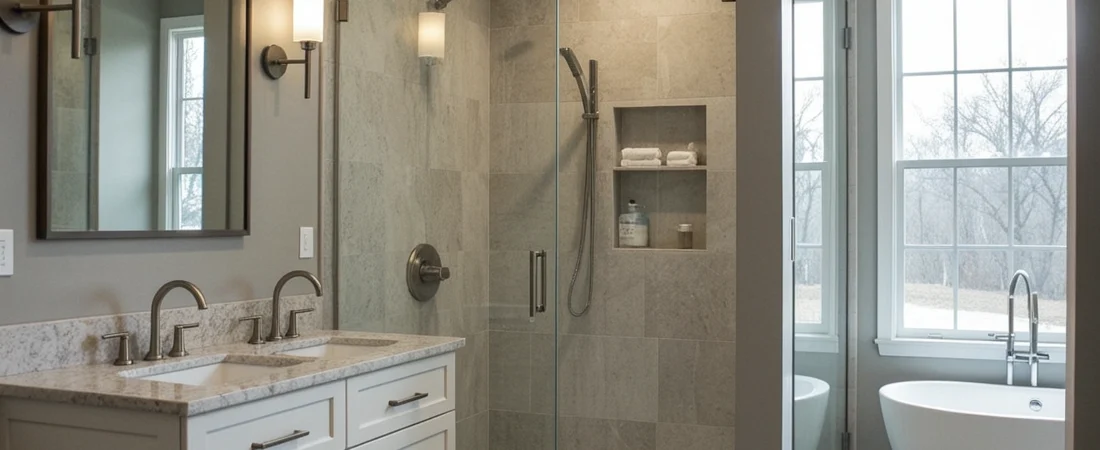
Bathrooms are small rooms with an unusual ability to create large renovation bills.
At first glance, a bathroom remodel can seem straightforward. Remove an old vanity, replace the tile, install a new shower, change the toilet, repaint the walls, and you are finished.
In reality, bathrooms combine plumbing, electrical work, waterproofing, flooring, ventilation, cabinetry, fixtures, tile, glass, lighting, and finish work inside one of the smallest rooms in the house.
That concentration of different trades is one reason bathroom remodeling costs can vary so dramatically.
As of July 2026, Angi reports that most professional bathroom remodels fall roughly between $6,647 and $17,644, with an average around $12,146. Across a broader range of project scopes, bathroom renovations can run from roughly $2,500 to $30,000, while extensive luxury projects can exceed $80,000. Angi currently estimates bathroom remodeling at approximately $70 to $250 per square foot depending on size, scope, materials, and finish level.
Fixr’s 2026 data is similar, placing the national average around $12,000 and a common range of approximately $6,000 to $18,000.
Those numbers are useful for planning, but they are not contractor quotes.
A homeowner replacing a vanity, flooring, paint, and fixtures while leaving the existing plumbing untouched may spend far less than someone building a custom walk-in shower, relocating the toilet, adding heated floors, moving walls, and installing premium stone.
The right question is therefore not simply:
“What does a bathroom remodel cost?”
A better question is:
“What type of bathroom am I remodeling, what am I changing, and how much infrastructure needs to move?”
That is what determines the budget.
Bathroom Remodel Cost at a Glance
Angi divides bathroom renovations into several broad project scopes. A minor remodel may cost roughly $3,000 to $10,000, a partial remodel around $10,000 to $25,000, and a full remodel approximately $25,000 to $80,000, particularly as fixture quality and project complexity increase.
Minor Bathroom Remodel
A minor remodel usually focuses on appearance rather than rebuilding the room.
You might repaint the walls, replace the faucet, change the light fixture, install a new mirror, update cabinet hardware, replace the vanity, or refresh accessories.
The existing shower, tub, toilet, plumbing layout, and major surfaces may remain mostly intact.
This can produce a noticeable visual improvement without requiring every trade involved in a complete renovation.
Partial Bathroom Remodel
A partial remodel goes further.
Perhaps the vanity and flooring are replaced.
Maybe an old tub becomes a new shower.
Tile may be replaced.
Lighting may change.
A toilet or sink may be upgraded.
The bathroom begins to feel substantially different, but the entire room is not necessarily stripped back to the framing.
Full Bathroom Remodel
A full remodel typically means replacing most or all major fixtures and surfaces.
The shower or tub, vanity, toilet, flooring, wall finishes, lighting, plumbing fixtures, and storage may all be replaced.
If the project also changes the layout, relocates plumbing, introduces custom tile work, or uses premium fixtures, the cost can rise dramatically.
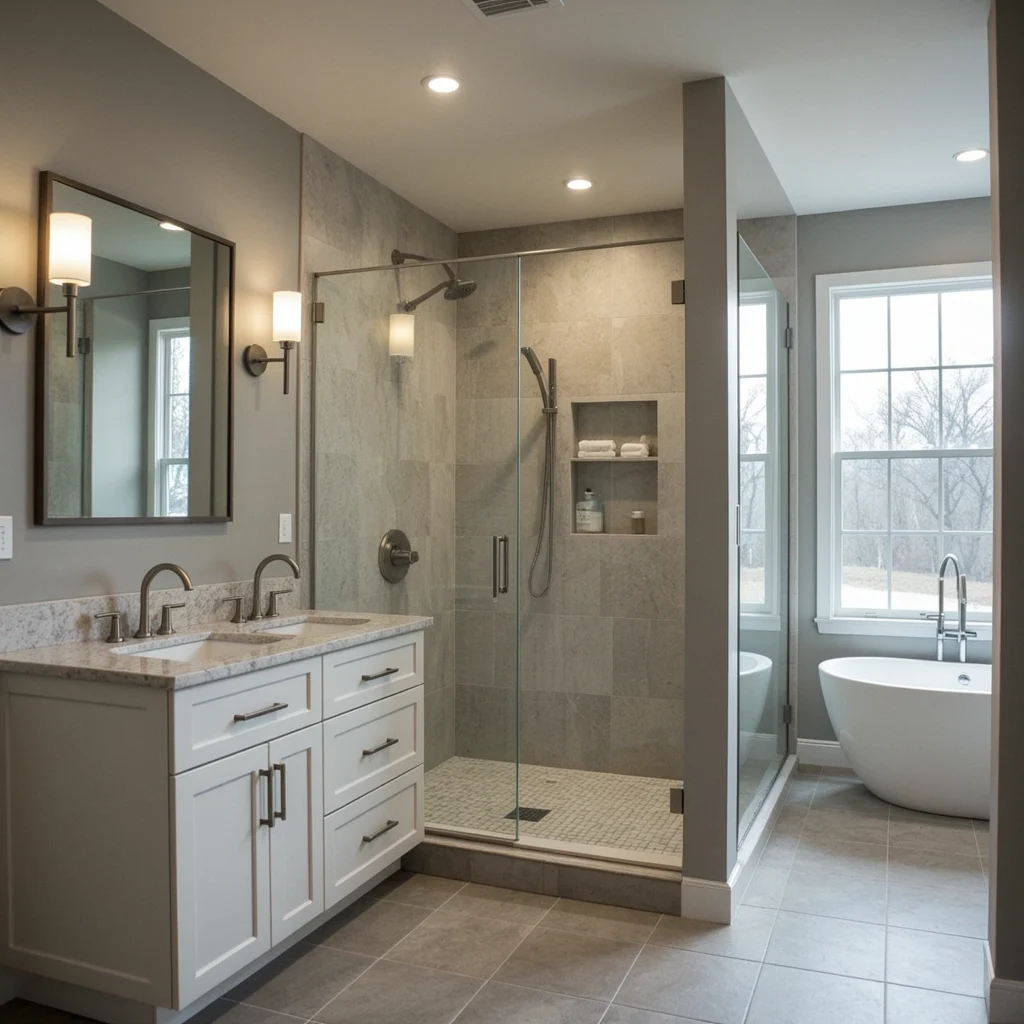
Bathroom Remodel Cost by Square Foot
Bathroom size gives homeowners a useful starting point, although it does not tell the whole story.
Current Angi data puts many bathroom remodels between approximately $70 and $250 per square foot. It estimates a 25-square-foot bathroom at roughly $1,800 to $6,300, a 50-square-foot bathroom at about $3,500 to $12,500, a 75-square-foot bathroom around $5,300 to $18,800, and a 100-square-foot bathroom roughly $7,000 to $25,000.
But square footage can be misleading if used by itself.
Imagine two 50-square-foot bathrooms.
The first homeowner installs basic ceramic tile, a stock vanity, a standard toilet, a simple tub-and-shower combination, and midrange fixtures.
The second homeowner installs book-matched stone, a custom floating vanity, a frameless glass shower, wall-mounted faucets, heated flooring, premium lighting, and custom cabinetry.
Same square footage.
Entirely different budget.
In bathrooms, the amount of work packed into each square foot matters almost as much as the amount of square footage itself.
Small Bathroom Remodel Cost
Small bathrooms are often assumed to be inexpensive.
Sometimes they are.
But a smaller room does not eliminate the fixed costs of a toilet, sink, plumbing, ventilation, lighting, waterproofing, contractor labor, permits where applicable, or shower equipment.
A tiny bathroom can still become expensive if it includes premium tile and custom work.
The most cost-effective small bathroom remodels generally make intelligent use of the existing layout rather than attempting to reinvent the room.
Keeping the toilet where it is, keeping the shower drain relatively close to its existing position, and using standard-size fixtures can simplify the renovation considerably.
The smaller footprint can also create an opportunity.
Because less tile and countertop material may be required, homeowners can sometimes afford a nicer finish in a compact bathroom without creating the same material bill that would occur in a large primary suite.
Powder Room Remodel Cost
A powder room is usually simpler because there is no shower or bathtub.
That removes one of the most complex parts of bathroom construction: the wet bathing area.
A typical powder-room project might involve a toilet, vanity or pedestal sink, faucet, mirror, lighting, flooring, paint or wallpaper, and accessories.
Because there is no shower enclosure, shower valve, bathtub, extensive wet-area waterproofing, or shower tile, the project can often remain more manageable.
But a powder room is also a place where homeowners often spend heavily on design.
A statement vanity, stone sink, premium wallpaper, decorative sconces, unusual mirror, or high-end faucet can quickly turn a small room into an expensive one.
There is nothing wrong with that if it is intentional.
The lesson is simply that small does not automatically mean inexpensive.
Primary Bathroom Remodel Cost
A primary bathroom can contain almost every expensive bathroom feature at once.
A large walk-in shower.
Double vanity.
Freestanding tub.
Multiple faucets.
Additional cabinetry.
Large mirrors.
More lighting.
More tile.
Larger floor area.
Sometimes separate toilet rooms.
Sometimes heated flooring.
Sometimes built-in storage.
Each feature adds material and labor, but the interaction between them matters too.
For example, building a large custom shower can involve framing, plumbing, shower valves, drain work, waterproofing, tile setting, grout, glass fabrication, lighting, ventilation, and finish work.
The finished shower looks like one feature.
The contractor sees several different jobs stacked on top of each other.
That difference explains a lot about remodeling prices.
The Shower Is Often One of the Biggest Expenses
A shower is not simply tile attached to a wall.
A properly constructed shower must manage water every single day for years.
Behind the visible surface may be framing, plumbing, waterproofing, a shower pan or waterproof shower base, drain components, wallboard or tile backer, tile setting materials, grout, sealants, shower valves, fixtures, niches, benches, and glass.
Angi’s current data estimates shower remodeling from roughly $300 to $15,000, depending on scope, while installing a complete shower averages around $8,200. Prefabricated systems can cost far less than custom tiled showers, while custom work can move beyond $10,000.
That enormous range exists because the word “shower” can mean many different things.
A homeowner replacing a simple showerhead has a shower project.
So does a homeowner building a six-foot-wide curbless shower with two shower heads, a bench, niche lighting, premium tile, custom glass, and relocated plumbing.
They are not financially comparable projects.
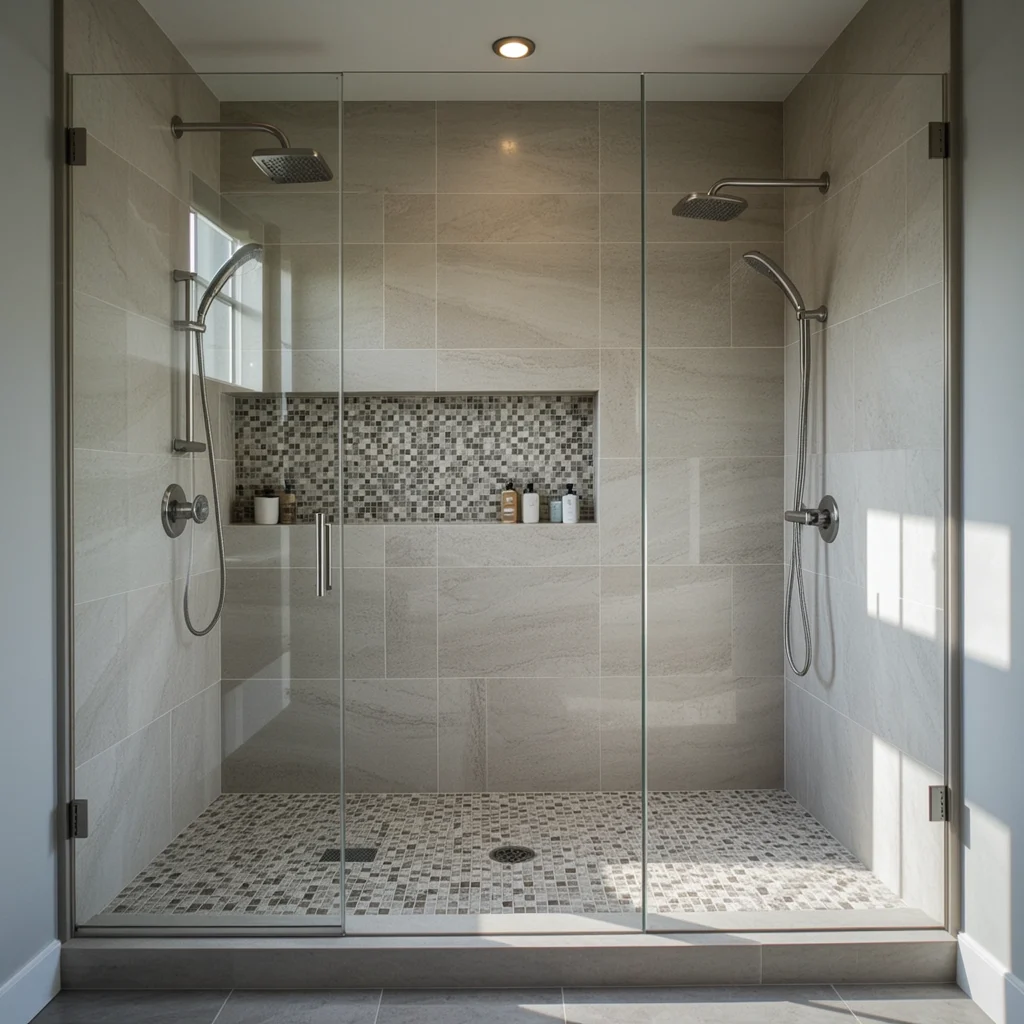
Walk-in showers have become a popular remodeling feature, particularly when homeowners want easier access or a more open appearance.
Angi currently estimates many walk-in shower installations at approximately $4,200 to $8,500, although custom sizes, specialty tile, complicated plumbing, benches, niches, premium glass, multiple shower fixtures, and curbless designs can push costs higher.
A walk-in shower can look simple when finished.
That simplicity is deceptive.
Large sheets of glass must be measured accurately.
Tile work must slope correctly toward the drain.
The shower must be waterproof.
A curbless design may require structural or floor-height planning.
The shower valve has to be positioned correctly.
If the design includes a bench or niche, those elements must be integrated into the waterproofing system.
This is why the price of the visible tile is only one part of the shower budget.
Tub-to-Shower Conversion Cost
One of the most common bathroom projects is removing a bathtub and replacing it with a shower.
Angi’s current estimates put many tub-to-shower conversions at approximately $1,200 to $3,600, although custom tile, plumbing modifications, structural work, upgraded glass, accessibility changes, and premium fixtures can raise the total considerably.
The biggest advantage is that the original tub already occupies a wet area.
That can make the conversion simpler than building a shower somewhere completely new.
However, homeowners should think about how the bathroom fits into the entire house.
Removing an unused tub from a primary bathroom may make perfect sense.
Removing the only bathtub from a house requires more thought, especially if future buyers with young children may value having one.
There is no universal answer.
The right decision depends on how the home is used.
Bathtub Replacement Cost
A bathtub can range from a simple acrylic unit to a heavy cast-iron tub or sculptural freestanding centerpiece.
Angi’s 2026 bathroom data places many bathtub replacement projects between roughly $2,000 and $9,400, depending on the tub, surrounding work, plumbing, and installation requirements.
The tub price is only part of the equation.
A larger freestanding tub may require plumbing to move.
A heavy tub may require additional consideration for the floor structure.
Removing an old cast-iron tub can involve substantial labor.
A new tub may change surrounding tile dimensions.
What begins as “replace the bathtub” can become a much larger section of the remodel.
Vanity Costs
The vanity is one of the most visually dominant elements in most bathrooms.
It also combines multiple cost categories.
The cabinet.
The countertop.
The sink.
The faucet.
The plumbing connections.
The mirror.
Potentially backsplash material.
Potentially lighting.
Homeowners generally choose among stock, semi-custom, and fully custom vanities.
A stock vanity can be surprisingly attractive and economical.
Semi-custom options allow more flexibility in size, finish, storage configuration, and countertop selection.
Custom vanities can be designed around the exact room, but customization can increase both material and installation costs substantially.
Angi notes that bathroom cabinetry can vary enormously depending on size and customization, with typical units often around $200 to $600 each, while highly customized bathroom cabinetry can add thousands to a project.
Before paying for custom cabinetry, decide what problem customization is solving.
If a standard 48-inch vanity fits perfectly, spending considerably more to have one built from scratch may not improve daily use.
If the room has unusual dimensions or you need very specific storage, custom work can make much more sense.
Double Vanity or Single Vanity?
A double vanity sounds automatically better.
It is not always.
If two people frequently prepare for work at the same time, two sinks may be genuinely useful.
But in a relatively narrow bathroom, two sinks can consume valuable countertop and drawer space.
Sometimes one larger sink with more storage is the better design.
A double vanity may also require additional faucet fixtures and plumbing connections.
The best bathroom layout is not the one with the longest feature list.
It is the one that solves the household’s actual problems.
Bathroom Countertop Costs
Bathroom countertops require less material than kitchen countertops, but the material still influences both appearance and budget.
Common options include laminate, cultured marble, solid surface, quartz, granite, porcelain, and natural stone.
Angi currently places vanity countertop replacement broadly around $400 to $4,300 including labor and materials, depending on whether the unit is stock or custom and which surface is selected.
Because bathroom vanities are relatively small, upgrading the countertop can sometimes be financially manageable.
A premium material on a 36-inch vanity does not require the same amount of stone as a large kitchen.
But fabrication still matters.
Sink cutouts.
Edge profiles.
Backsplashes.
Faucet holes.
Installation.
A small piece of expensive stone is still expensive if it requires complicated fabrication.
Bathroom Tile Cost
Tile often becomes one of the defining design choices in a bathroom.
But tile pricing can be confusing because the material cost tells only part of the story.
Angi currently estimates professional bathroom retiling with midrange materials at roughly $10 to $50 per square foot including labor, while materials themselves vary widely. Ceramic and porcelain can be relatively economical, while intricate mosaics, large-format tile, glass, marble, and other premium surfaces can increase both material and labor expenses.
The shape and layout matter too.
A contractor can install a large rectangular tile relatively efficiently in a simple room.
Tiny mosaic pieces require far more grout lines.
Herringbone patterns require more cuts.
Highly veined stone may need careful layout so pieces look intentional.
Large-format tiles may require especially flat surfaces.
A niche adds corners and edges.
A bench adds more.
The tile itself may look like the star of the project.
The labor required to make it look right can be equally important.
Bathroom Flooring
Bathroom flooring has one obvious challenge:
Water.
The floor must tolerate humidity, wet feet, splashes, cleaning, and occasional standing water better than many ordinary interior flooring materials.
Common choices include porcelain tile, ceramic tile, luxury vinyl, natural stone, and other water-resistant surfaces.
Angi estimates average new flooring installation around $12.50 per square foot, although bathroom tile can cost considerably more depending on the material and installation complexity.
Do not evaluate flooring on appearance alone.
Consider traction.
Maintenance.
Coldness underfoot.
Grout maintenance.
Durability.
Water exposure.
And how the bathroom floor transitions into the hallway or bedroom outside it.
A beautiful floor that becomes dangerously slippery when wet is not a particularly successful bathroom floor.
Heated Bathroom Floors
Radiant floor heating is one of those upgrades that is difficult to appreciate from a photograph.
It does not change the visual design dramatically.
But on a cold morning, stepping onto a warm tile floor can completely change how the bathroom feels.
Heated floors add material, electrical, control, and installation costs, so they are easiest to install while the existing floor has already been removed.
Adding them later means disturbing a finished floor again.
If heated flooring is something you genuinely want, decide before the new tile goes down.
That is much cheaper than regretting the decision after the renovation is complete.
Plumbing Costs
Plumbing is one of the major reasons bathrooms cost more to remodel than ordinary rooms.
A bedroom does not need a toilet drain, shower valve, sink supply lines, tub filler, waterproof bathing area, and ventilation system.
Bathrooms do.
Moving plumbing fixtures can increase costs quickly.
Keeping the toilet, sink, and shower close to their existing locations generally simplifies construction because contractors can make greater use of existing infrastructure.
Angi reports plumbing updates within bathroom remodels averaging around $800 in ordinary cases, while major rough-in plumbing for a new bathroom or extensive renovation can be around $7,000. Plumber rates in its current data range broadly from roughly $45 to $200 per hour, depending on location and work involved.
This does not mean you should never move plumbing.
Sometimes a bad bathroom layout needs to change.
But moving the toilet six inches because it looks slightly nicer on a drawing is different from moving it because the change makes the room function dramatically better.
Spend money where it solves real problems.
Why Moving a Toilet Can Become Expensive
A toilet looks simple.
There is a tank, bowl, water supply, and drain.
The important part is the drain.
Moving a sink often involves relatively small supply and drain lines.
A toilet uses a much larger waste line, and that line has to work with the floor structure and drainage layout.
Where the joists run matters.
Where the existing stack is located matters.
The direction of the new line matters.
That is why moving the toilet can become much more involved than homeowners expect.
Before designing an entirely new layout, have someone who understands the plumbing evaluate whether the drawing actually makes sense inside the structure of the house.
Electrical Work
Bathrooms have electricity and water operating only a few feet apart, which makes electrical design particularly important.
Remodeling may involve vanity lighting, recessed lighting, shower-rated fixtures, exhaust fans, heated flooring, additional outlets, electric mirrors, towel warmers, or other features.
Older bathrooms may also reveal wiring that needs to be brought into line with current project requirements.
Angi’s 2026 bathroom cost data lists electrician rates broadly around $50 to $200 per hour, while installing new light fixtures can commonly run around $200 to $600, depending on the fixture and work required.
Electrical work should be planned before walls and tile are finished.
Discovering afterward that you wanted another outlet beside the vanity is a frustrating and potentially expensive mistake.
Ventilation Matters More Than Decoration
Bathrooms create moisture.
Showers create a lot of it.
Without suitable ventilation, moisture can contribute to condensation, paint damage, deteriorating finishes, and conditions favorable to mold growth.
A good exhaust fan is not glamorous.
Most guests will never compliment it.
But it may do more for the long-term health of the room than a decorative fixture costing five times as much.
Angi currently lists several bathroom ventilation options in the low hundreds of dollars, depending on the fan type and installation needs.
When planning a remodel, treat ventilation as infrastructure, not an accessory.
Lighting Design
Bathroom lighting should do at least two jobs well.
It should make the room pleasant.
And it should make the mirror useful.
A single ceiling fixture often produces shadows across the face.
That is not ideal when shaving, applying makeup, grooming, or getting ready for work.
Lighting beside or around the mirror can provide more even illumination.
The bathroom may then benefit from separate overhead lighting and, in larger rooms, additional lighting near a shower or tub where appropriate.
Lighting is one of the few renovation expenses that homeowners interact with every single day.
It deserves more attention than simply choosing the fixture that looks nicest in a showroom.
Mirrors and Medicine Cabinets
A mirror can be one of the least expensive major visual upgrades in a bathroom.
But mirrors now range from simple framed glass to large custom installations with integrated lighting, heating, storage, outlets, and smart features.
Before choosing one, consider what you actually need.
A beautiful flat mirror may work perfectly if the vanity provides plenty of storage.
A medicine cabinet can be much more useful in a small bathroom where storage is limited.
Do not sacrifice everyday practicality simply because minimalist photography hides everything people actually use.
Real bathrooms have toothbrushes.
Medication.
Razors.
Hair products.
Skin care.
Cleaning supplies.
Design storage for real life.
Toilets
A toilet replacement is usually not the largest part of a bathroom remodel, but toilet prices vary more than many homeowners expect.
Angi’s 2026 data gives an average toilet installation cost of around $375 for a midrange model, while specialty models, wall-mounted toilets, and smart toilets can cost considerably more.
If the existing toilet location works, replacing it in place is usually simpler than redesigning the plumbing around a new position.
It is also worth thinking about replacement parts and maintenance.
A highly specialized fixture may look impressive, but a standard, reliable model with readily available parts can be easier to own for the next decade.
Bathroom Sink Costs
A sink can be integrated into the vanity, dropped into the countertop, mounted underneath it, attached directly to the wall, placed on top as a vessel sink, or installed as a pedestal unit.
Angi currently estimates installation of many standard midrange bathroom sinks at approximately $250 to $675, before unusually expensive fixtures or complicated plumbing modifications.
The design affects cleaning as much as appearance.
A vessel sink looks distinctive, but homeowners should consider whether they like cleaning around the base.
An undermount sink creates a clean countertop edge.
A pedestal sink saves visual space but offers almost no storage.
Every design decision gives something and takes something away.
Faucet Costs
Faucets can be a relatively modest upgrade or a surprisingly expensive one.
Angi currently places many sink faucet upgrades around $170 to $360, while specialized wall-mounted fixtures can cost substantially more depending on installation and finish.
Wall-mounted faucets look clean because the countertop remains uncluttered.
But they should be planned before the wall is finished.
The plumbing position has to match the sink.
The faucet projection has to make sense.
The height has to be right.
A countertop-mounted faucet is usually more forgiving.
Again, complexity costs money.
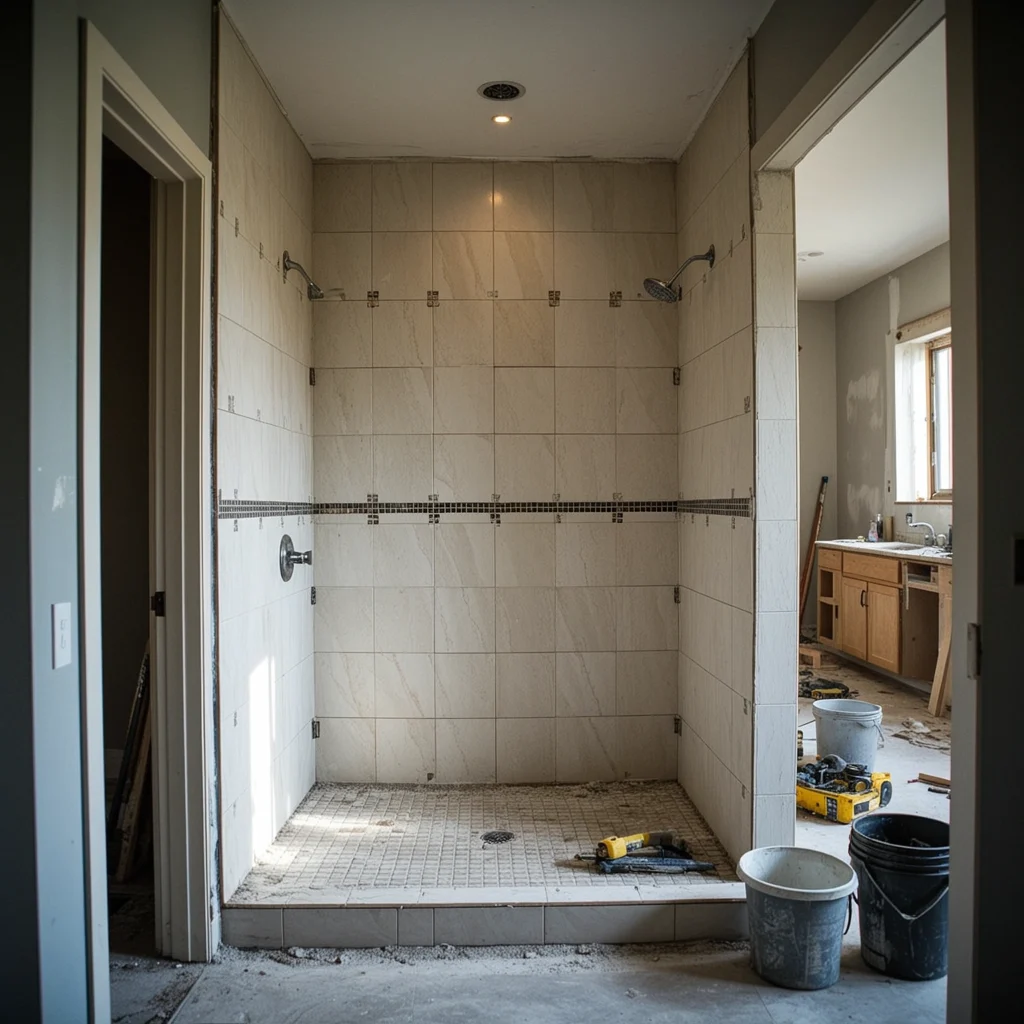
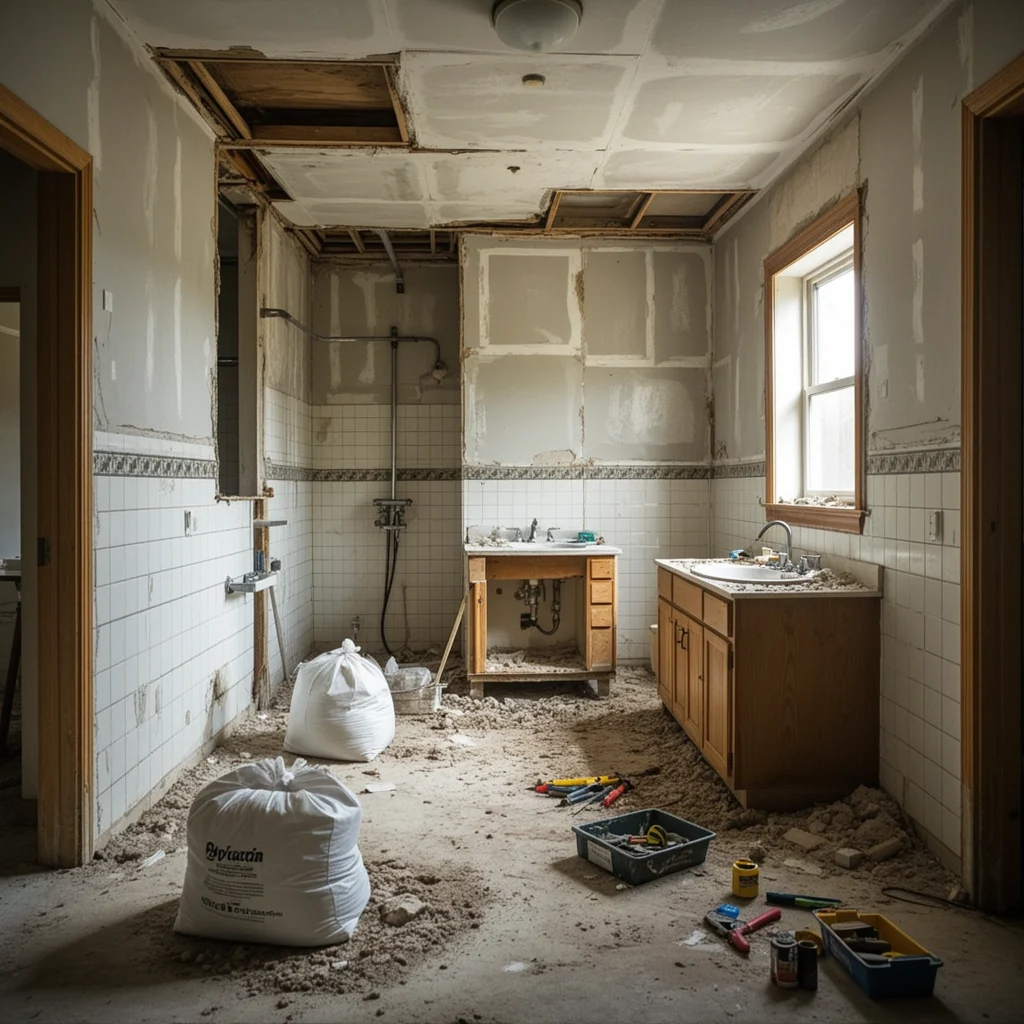
Demolition Cost
Demolition is the moment when the old bathroom disappears.
It is also the moment when hidden problems become visible.
Angi currently estimates bathroom demolition around $1,000 to $2,300 for many remodeling projects.
Costs can rise when there is heavy tile, difficult access, thick mortar beds, old cast-iron fixtures, extensive debris, or special material-handling requirements.
Demolition may reveal damaged subflooring.
Water damage behind a shower.
Old plumbing.
Poorly executed previous renovations.
Hidden electrical issues.
That uncertainty is exactly why homeowners should avoid spending every dollar of the budget on visible finishes before construction begins.
Permit Costs
Not every cosmetic bathroom update requires the same approval process.
Replacing paint, mirrors, or hardware is very different from relocating plumbing, modifying electrical systems, changing structural components, or creating a new bathroom.
Angi’s July 2026 data estimates bathroom remodeling permit costs broadly around $100 to $1,000, though actual requirements and fees are determined locally.
Before work begins, ask the contractor a direct question:
Who is responsible for obtaining required permits and arranging inspections?
Do not wait until halfway through construction to discover that everyone assumed someone else was handling it.
Labor Can Be a Huge Part of the Budget
Bathrooms are labor-intensive.
The room might require a general contractor, plumber, electrician, tile installer, glass installer, painter, carpenter, and other specialists.
Angi estimates labor at roughly 40% to 65% of the total bathroom remodeling budget, depending on the complexity of the project and local market.
This is why buying cheaper tile does not necessarily cut the total project cost dramatically.
If the installation is complex, labor may still dominate.
Likewise, a seemingly expensive material can sometimes make sense if the quantity required is small and installation is straightforward.
Homeowners should evaluate both sides of every product choice:
What does the material cost?
And:
What does it cost to install correctly?
Why Waterproofing Is Not the Place to Save Money
A shower’s finished tile gets all the attention.
The most important parts may be completely invisible after construction.
Waterproofing systems sit behind or underneath finished surfaces and help keep water where it belongs.
A tiny tile defect can sometimes be repaired.
A shower that leaks into the framing can create a much larger problem.
When comparing contractor bids, do not ask only:
“Which tile are you using?”
Also ask how the shower will be constructed and waterproofed.
The parts you never see may determine how long the room lasts.
Common Bathroom Remodeling Mistakes
The most expensive mistakes are not always expensive materials.
They are expensive decisions.
One is changing the layout without understanding the plumbing implications.
Another is choosing every fixture independently and then discovering they do not work visually or physically together.
Another is forgetting storage.
Another is designing inadequate lighting.
Another is treating ventilation as optional.
Another is choosing slippery flooring because it looked good in a photograph.
Another is spending nearly the entire budget before demolition reveals what is hidden behind the walls.
And one of the most common mistakes is changing the project repeatedly after construction begins.
A contractor can price a defined project.
A moving target is much harder to price.
How Much Contingency Should You Keep?
A remodeling budget should have breathing room.
Bathrooms contain enough hidden plumbing, framing, wiring, waterproofing, and subfloor conditions that surprises are possible.
Instead of spending your entire available budget on the initial selections, reserve money for unexpected work.
For example, if your absolute financial limit is $20,000, designing a project that already requires every dollar before construction begins gives you almost no flexibility.
You may never need the contingency.
That is the best outcome.
But having it can prevent an ordinary renovation surprise from becoming a financial crisis.
Where You Can Save Money
The easiest savings often come from simplifying the scope rather than buying the cheapest possible materials.
Keeping fixtures near existing plumbing locations can help.
Using a stock vanity rather than custom cabinetry can help.
Selecting a standard-size shower enclosure can help.
Using beautiful but reasonably priced porcelain instead of premium stone can help.
Keeping a functional bathtub instead of replacing it for purely cosmetic reasons can help.
Painting walls yourself may help if you are comfortable doing it properly.
The goal is not to make every line item cheap.
The goal is to spend deliberately.
Where Spending More Can Be Worth It
Some upgrades affect daily life enough that spending more may make sense.
Good shower fixtures.
Reliable plumbing work.
Quality waterproofing.
Useful storage.
A properly installed exhaust fan.
Comfortable lighting.
Durable flooring.
Well-made drawer hardware.
A shower door that operates smoothly.
These are not necessarily the features that receive the most attention in photographs.
But they are the features you interact with constantly.
A bathroom is successful when it still works well after the novelty of the renovation has disappeared.
Should You DIY a Bathroom Remodel?
Some parts of a bathroom remodel can be reasonable DIY projects for homeowners with the necessary skill and patience.
Painting is an obvious example.
Replacing cabinet hardware may be straightforward.
Installing simple accessories may be manageable.
Certain demolition or cosmetic tasks may also be possible.
But bathrooms contain systems where mistakes can create much larger problems.
Plumbing leaks can damage areas outside the bathroom.
Incorrect electrical work can create safety risks.
Poor shower waterproofing may fail long after the tile looks finished.
Complex tile work can become expensive to redo.
Before choosing DIY simply to save labor costs, ask:
If I make a mistake here, what does it cost to fix?
That question is more useful than asking only what a contractor charges.
Accessibility Improvements
Bathroom renovations are also an opportunity to think about how the room will work in the future.
A zero- or low-threshold shower.
Grab-bar reinforcement.
Wider pathways.
A shower bench.
Handheld shower fixtures.
Better lighting.
Slip-resistant surfaces.
Comfortable toilet height.
Accessible storage.
Even homeowners who do not currently need these features may appreciate some of them later.
And some accessibility improvements do not need to make a bathroom look institutional.
Good planning can integrate safety into the design naturally.
Bathroom Storage
Beautiful bathrooms in advertisements often contain almost nothing.
Real bathrooms are different.
Towels.
Cleaning supplies.
Toilet paper.
Medication.
Hair dryers.
Razors.
Cosmetics.
Skin care.
Extra soap.
Toothbrushes.
If you remove a large vanity and replace it with a visually lighter pedestal sink, you may improve the photograph and make daily life worse.
Before choosing storage, inventory what the bathroom actually needs to hold.
Then design around that reality.
A drawer where you need it may be more valuable than an expensive decorative feature.
Should You Add a Freestanding Tub?
Freestanding tubs photograph beautifully.
Whether they are worth the space depends on how you live.
If you take baths regularly, a comfortable soaking tub may be one of the best parts of the renovation.
If you have not taken a bath in ten years, installing a large tub because luxury bathrooms are “supposed” to have one may not be the best use of money and floor space.
Ask yourself whether you are remodeling for your lifestyle or for an image of someone else’s lifestyle.
That question can save thousands of dollars.
Bathroom Remodeling and Home Value
Bathrooms are important to buyers, but renovation spending should still be considered carefully.
Current Angi guidance says bathroom remodeling can deliver meaningful resale value, although the amount recovered varies by project level, market, and property.
A clean, functional, broadly appealing bathroom may help a home show better.
But a very expensive renovation does not guarantee an equivalent increase in sale price.
A $70,000 bathroom can be worth every dollar to a homeowner planning to stay for 20 years.
That is different from saying a future buyer will pay $70,000 more for the house.
Personal value and resale value are not identical.
Remodel for Yourself or for Resale?
If you plan to remain in the house for many years, prioritize how the bathroom works for you.
Choose the shower you actually want.
Build useful storage.
Improve the lighting.
Add features that make your mornings easier.
If you expect to sell soon, it may make sense to lean toward broadly appealing choices and avoid spending heavily on features that are extremely personal.
There is no universal “best” bathroom.
There is only the bathroom that best fits the purpose of the remodel.
How to Compare Contractor Quotes
Do not compare contractor estimates using only the final number.
A $12,000 proposal and an $18,000 proposal may not describe the same project.
One might include demolition, waste disposal, plumbing, electrical work, waterproofing, tile installation, paint, permits, and cleanup.
The other might exclude several of those items.
Before comparing prices, compare the scope.
Ask contractors to clarify what is included, what is excluded, which fixtures are allowances, who purchases materials, who obtains permits, what happens when concealed problems are discovered, how change orders are priced, and what warranty applies to the work.
A detailed expensive quote can sometimes be cheaper than a vague low quote that grows throughout construction.
Questions to Ask Before Hiring a Bathroom Remodeler
Use this list when talking with contractors:
- What exactly is included in the estimate?
- What is excluded?
- Does the price include demolition and disposal?
- Who purchases tile and fixtures?
- Are product allowances included?
- Who handles plumbing?
- Who handles electrical work?
- How will the shower be waterproofed?
- Who measures and installs shower glass?
- Are permits required?
- Who obtains them?
- What happens if hidden water damage is found?
- How are change orders approved?
- What is the expected project schedule?
- What payment schedule is required?
- What warranty is provided?
- How will nearby floors and rooms be protected?
- Who will supervise the work each day?
A clear conversation before construction is much cheaper than an argument afterward.
A Practical Bathroom Remodeling Budget
Imagine a homeowner has a total budget of $18,000.
The mistake would be choosing $18,000 worth of visible products before labor, demolition, plumbing, electrical work, permits, and unexpected repairs have been considered.
A better approach is to treat the budget as several connected pieces.
The shower or tub.
Vanity.
Countertop.
Toilet.
Tile and flooring.
Plumbing.
Electrical.
Lighting.
Ventilation.
Demolition.
Paint.
Accessories.
Labor.
Contingency.
Once every category is visible, homeowners can decide where to upgrade and where to simplify.
The budget becomes a plan rather than a shopping spree.
How to Keep a Bathroom Remodel From Going Over Budget
Make major decisions before demolition begins.
Choose the vanity.
Choose the shower system.
Choose tile.
Choose the toilet.
Choose faucets.
Choose lighting.
Choose the mirror.
Confirm plumbing locations.
Confirm electrical requirements.
Confirm who buys what.
Confirm whether products are actually available.
Then resist changing your mind every three days.
Changing from one towel hook to another is minor.
Changing the shower size after waterproofing has begun is not.
Late design changes often affect several trades at once.
That is where budgets become difficult to control.
How Long Does a Bathroom Remodel Take?
Project duration varies enormously with scope, contractor scheduling, inspections, product availability, custom fabrication, and unexpected conditions.
A cosmetic update may move relatively quickly.
A full renovation can involve demolition, framing, rough plumbing, electrical work, inspections, waterproofing, tile, cabinetry, countertop installation, painting, plumbing trim, electrical fixtures, shower glass, and final corrections.
Some parts also depend on previous parts being finished.
Custom shower glass generally cannot be measured accurately until the shower surfaces are complete.
Countertops may depend on the vanity installation.
Inspections may need to happen before walls are closed.
The project therefore moves in a sequence.
More workers do not always make every stage happen simultaneously.
Final Bathroom Remodel Cost Expectations for 2026
For homeowners beginning a bathroom project in 2026, a useful starting point is the current national average of approximately $12,000 to $12,146 reported by current cost guides. Many professional projects fall in the neighborhood of roughly $6,000 to $18,000, but the wider remodeling market extends from a few thousand dollars for limited updates to $25,000–$80,000 for extensive full remodels, with luxury projects capable of exceeding that level.
The amount you actually spend will depend on what is already there and how much you decide to change.
Keeping the existing layout and choosing sensible fixtures can control costs.
Moving plumbing, building custom showers, ordering custom cabinetry, installing extensive tile, and selecting luxury fixtures can move the budget rapidly in the opposite direction.
The best bathroom remodel is not necessarily the one with the largest shower, most expensive tile, or longest list of upgrades.
It is the bathroom that works comfortably, handles water properly, provides enough storage and light, fits the household, and stays within a budget the homeowner can actually afford.
That is a successful remodel.
HomeCostPilot Note
HomeCostPilot provides independent informational cost guidance for U.S. homeowners. Cost figures and ranges in this guide are intended for general planning purposes and are not guaranteed contractor quotations. Actual bathroom remodeling costs vary according to location, labor, materials, project scope, property conditions, permits, contractor pricing, and other factors. Obtain current estimates from qualified local professionals before making major project decisions.
Image count for this article
Use 4 images total:
1. Featured remodeled bathroom
2. Custom walk-in shower
3. Tile installation in progress
4. Bathroom demolition
Internal links to add
Link Cost Guides to your Cost Guides page, How Costs Are Calculated to that page, and near the end link Editorial Policy, Fact Checking, and Disclaimer to their respective pages.