A home’s siding is one of the first things people notice, but appearance is only part of its job.
The exterior cladding system also helps shield the structure behind it from rain, wind, moisture, insects, temperature swings, and years of weather exposure. That is why replacing siding can turn into one of the more substantial exterior projects a homeowner undertakes.
For 2026, professional siding replacement averages about $11,588 nationally, and many projects land between roughly $5,559 and $17,724. Costs rise on larger or taller homes, complicated elevations, premium materials, and projects involving masonry or hidden wall repairs. (angi.com)
The material itself is only one line in the budget. A complete job may also involve demolition, disposal, sheathing repairs, flashing, insulation, trim, permits, scaffolding, and local labor.
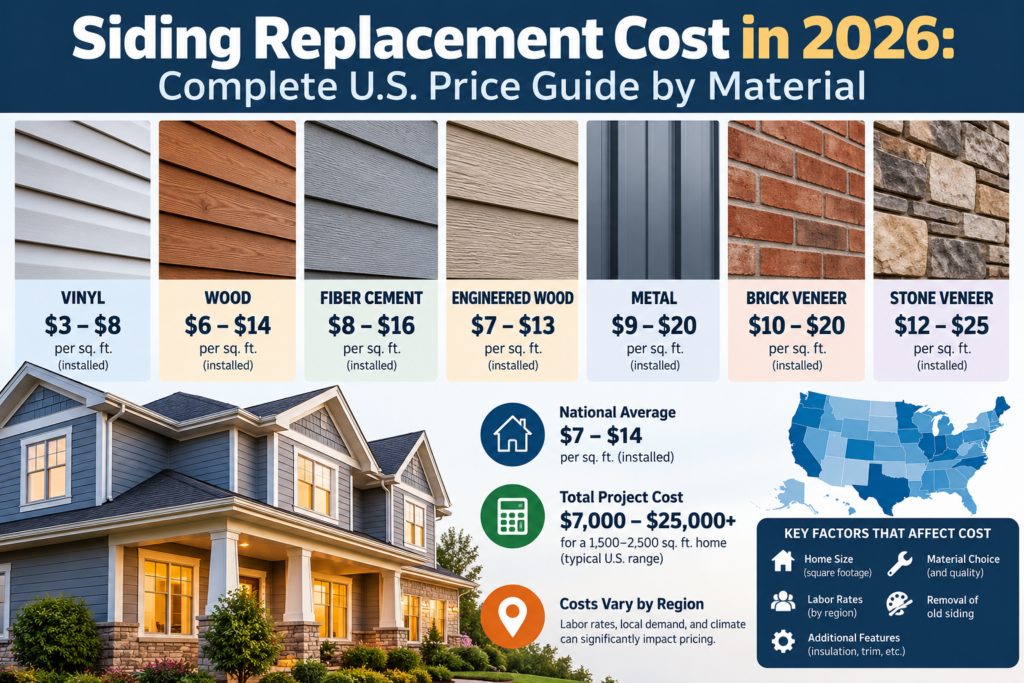
2026 Siding Cost Snapshot
| Siding Type | Approximate Installed Cost |
|---|---|
| Vinyl | $3–$12 per sq. ft. |
| Aluminum | $2–$5 per sq. ft. |
| Engineered wood | $4–$9 per sq. ft. |
| Wood | $2–$5+ per sq. ft. |
| Fiber cement | $5–$14+ per sq. ft. |
| Stucco | Around $5–$6+ per sq. ft. |
| Brick | $9–$28+ per sq. ft. |
| Stone | $35–$50+ per sq. ft. |
| Typical complete project | $5,559–$17,724 |
| National planning average | Around $11,588 |
These figures are useful for national budgeting, but they are not contractor quotes. House design, market conditions, labor pricing, materials, and project scope can shift the final number substantially. (angi.com)
Why Interior Square Footage Does Not Equal Siding Area
One of the easiest ways to miscalculate siding cost is to use the home’s living area.
A 2,000-square-foot house does not automatically have 2,000 square feet of siding.
Contractors price the exterior wall surface, not the interior floor plan. A narrow two-story house can have a very different amount of wall area than a wide single-story ranch with the same interior square footage.
Measurements commonly account for:
- exterior wall dimensions
- gables
- garages
- doors and windows
- dormers
- architectural projections
- trim
- soffits and fascia
- waste from cuts
- building height
For better quote comparisons, ask contractors to state the approximate siding area included in the proposal.
Vinyl Siding Cost in 2026
Vinyl remains one of the most familiar residential siding products in the United States because it combines a relatively accessible price with low routine maintenance and a large selection of colors and profiles.
Current 2026 project data places professional vinyl siding replacement around $6,368 to $18,377, with an average of approximately $12,306. (angi.com)
The word “vinyl” covers products of very different quality.
Higher-priced lines may include:
- thicker panels
- insulated backing
- premium textures
- stronger impact resistance
- deeper shadow lines
- better warranty coverage
- specialty profiles
This is why comparing only total price can be misleading.
A contractor bidding a premium insulated vinyl system is not necessarily offering the same product as another contractor quoting builder-grade panels.
Always ask for the exact manufacturer and product line.
Fiber Cement Siding Cost
Fiber cement is often selected by homeowners who want a more substantial exterior appearance while still getting a product designed to imitate painted wood.
Current 2026 pricing places many fiber cement installations between about $6,584 and $23,206, with a national average around $14,887. Installed pricing may commonly land in the $7 to $18 per square foot range depending on style and project difficulty. (angi.com)
Fiber cement can be durable, but installation is more demanding than vinyl.
The material is heavier, requires careful cutting and handling, and must be properly flashed and sealed. Depending on the product, painting may also be part of the job.
Engineered Wood Siding
Engineered wood gives homeowners another route to a wood-like exterior without relying entirely on traditional solid lumber.
Pricing depends on:
- lap versus panel products
- finish
- texture
- thickness
- manufacturer
- installation method
General current estimates place engineered wood at roughly $4 to $9 per square foot in many situations. (homeadvisor.com)
Natural Wood Siding
Real wood remains attractive for craftsman, cottage, traditional, and custom homes.
Cedar is one common example.
The initial purchase price is only part of the long-term cost, because wood may need:
- repainting
- staining
- caulking
- pest prevention
- inspection
- localized board replacement
Properties in wet climates should pay close attention to both maintenance and installation details.
Aluminum and Steel Siding
Metal siding can make sense where homeowners want durability or resistance to issues that affect some organic materials.
Aluminum is lightweight and does not rust like untreated steel, though it can dent.
Steel is stronger but generally costs more.
The final appearance differs significantly by manufacturer and profile, so physical samples are worth reviewing before making a decision.
Brick and Stone
Brick and stone can push the budget far beyond common vinyl or wood-based products.
Current planning data places brick around $9 to $28 per square foot, while stone can reach about $35 to $50 per square foot. (homeadvisor.com)
Masonry installations can involve:
- structural review
- foundation support
- mortar work
- drainage detailing
- flashing
- specialty labor
Manufactured stone veneer is another option, but it still needs to be installed as part of a proper moisture-management system.
Old Siding Removal Can Add Thousands
Homeowners often look at retail material pricing and underestimate the cost of taking the existing siding off.
Demolition may involve:
- removing the old cladding;
- pulling fasteners;
- exposing and inspecting the wall;
- loading debris;
- hauling material away;
- paying disposal charges;
- cleaning the property.
For fiber cement projects, current estimates can place old siding removal around $1,000 to $3,000, though actual cost varies by home and existing material. (angi.com)
Make sure removal and disposal are clearly addressed in the quote.
What Might Be Hiding Behind the Existing Siding?
The wall underneath may look completely different once the old material is stripped away.
Contractors can uncover:
- rotten sheathing
- failed house wrap
- mold
- insect damage
- damaged window openings
- deteriorated framing
- failed flashing
- hidden moisture problems
Because some of these issues cannot be confirmed before demolition, homeowners should avoid using every dollar of their available budget on the initial quoted price.
A contingency of roughly 10% to 15% beyond the original estimate can provide room for legitimate surprises.
House Wrap, Flashing, and Weather Protection
The visible siding is only the outer layer.
Behind it, a complete wall system may also depend on:
- weather-resistant barriers
- house wrap
- flashing tape
- window flashing
- door flashing
- insulation
- drainage layers
- rain-screen systems
These hidden details often matter more to long-term water protection than the color of the siding.
Insulated Siding
Some vinyl systems include foam backing.
Homeowners may choose insulated siding for:
- additional thermal resistance
- more rigidity
- a flatter appearance
- possible comfort benefits
However, the energy performance of a house depends on the whole building.
If efficiency is the main goal, compare siding insulation with other possible upgrades such as attic insulation, duct sealing, air sealing, HVAC improvements, or windows.
Why Complexity Changes Labor Cost
Picture two homes with similar exterior area.
The first is one story, rectangular, flat around the perimeter, and easy to access.
The second has three stories, multiple gables, bay windows, dormers, and sloping ground.
Even if material quantities are similar, the second house requires more:
- scaffolding
- ladder work
- detailed cuts
- flashing
- trim
- safety setup
- labor hours
This is why a simple price-per-square-foot calculator can only be a preliminary estimate.
Regional Cost Differences Across the U.S.
There is no true single siding price for the entire country.
Expensive metro areas can carry higher contractor pricing because of:
- wages
- insurance
- disposal charges
- permitting
- transportation
- business overhead
Climate changes the product decision too.
Different regions may place greater emphasis on:
- wildfire resistance
- coastal salt exposure
- hail
- humidity
- severe heat
- wind
- freeze/thaw cycles
The right siding for one region may not be the right choice for another.
When Replacement Makes Sense
Homeowners should not replace siding purely because of age.
More meaningful warning signs can include:
- repeated moisture intrusion
- extensive cracking
- warping
- loose panels
- rot
- pest damage
- severe widespread deterioration
- recurring repair bills
- damaged sheathing
A single damaged panel does not automatically justify replacing the whole house.
Repair or Replace?
Repair often makes sense when the problem is small and isolated.
Storm damage to a limited group of panels, for example, may be far cheaper to repair.
Full replacement becomes easier to justify when:
- failure is widespread;
- the old product cannot be matched;
- hidden water damage is extensive;
- multiple elevations need work;
- windows, trim, or other exterior systems are already being replaced.
What a Detailed Siding Quote Should Show
A strong contractor proposal should ideally identify:
- siding manufacturer
- product line
- quantity
- demolition
- hauling
- house wrap
- flashing
- insulation
- trim
- starter materials
- fasteners
- soffit and fascia
- permits
- labor
- repairs
- cleanup
- warranty
Detailed proposals make contractor comparison much easier.
Ways to Control Cost
Get several estimates rather than relying on one number.
Compare identical materials, not just totals.
Keep decorative complexity reasonable if budget matters.
Coordinate related exterior projects when possible.
And do not cover damaged sheathing or moisture problems merely to avoid a repair bill.
Does Siding Add Home Value?
New siding can change curb appeal immediately.
Buyers may also value knowing that a major exterior system was recently replaced.
However, no remodeling project guarantees a full return on every dollar spent.
The result depends on:
- neighborhood
- local market
- installation quality
- material
- previous condition
- overall property quality
Replacing badly deteriorated siding can also help protect value by stopping further damage.
Frequently Asked Questions
How much does siding replacement cost in 2026?
Current national data places many projects between $5,559 and $17,724, with an average around $11,588. (angi.com)
What siding is generally the least expensive?
Basic vinyl and aluminum are among the lower-cost common options, although installed cost depends on the house and local market.
What does vinyl siding cost?
Many 2026 professional vinyl replacement projects fall around $6,368 to $18,377. (angi.com)
Is fiber cement typically more expensive than vinyl?
Usually. Current estimates put many fiber cement installations between $6,584 and $23,206. (angi.com)
Should windows be replaced before new siding?
If both are planned, coordinate the sequence with the contractors because window flashing and siding interact.
Does siding require a permit?
That depends on the jurisdiction and project scope. Check with the appropriate local building department.
Final Thoughts
A siding replacement budget should account for much more than the panels visible from the street.
Possible expenses include:
- siding
- demolition
- disposal
- house wrap
- flashing
- repairs
- insulation
- trim
- equipment
- permits
- labor
- cleanup
Many U.S. homeowners will fall somewhere within the current $5,559 to $17,724 range, but complex properties and premium materials can go much higher. (angi.com)
The most important priority is a dry, properly protected wall assembly. Appearance matters, but drainage, flashing, moisture control, and installation quality determine whether the new exterior performs well for years.
HomeCostPilot Note: HomeCostPilot provides general informational cost guidance for U.S. homeowners. Prices are planning estimates, not guaranteed contractor quotes. Local labor rates, materials, codes, property conditions, design and project scope can substantially change actual prices.